Master 30 Dry Fruit Names in English with Cool Facts
A heavy wooden chest slammed shut in the dark pantry. A secret pouch spilled golden seeds across the cold stone floor.
Tension filled the quiet room. Discovery followed. For thousands of years, people have relied on dried fruits and nuts to stay strong on long journeys.
Learning about these foods helps us describe healthy snacks and natural treats. When you practice using parts of speech in class, learning these words makes your writing stand out. Let’s explore 30 tasty treats!
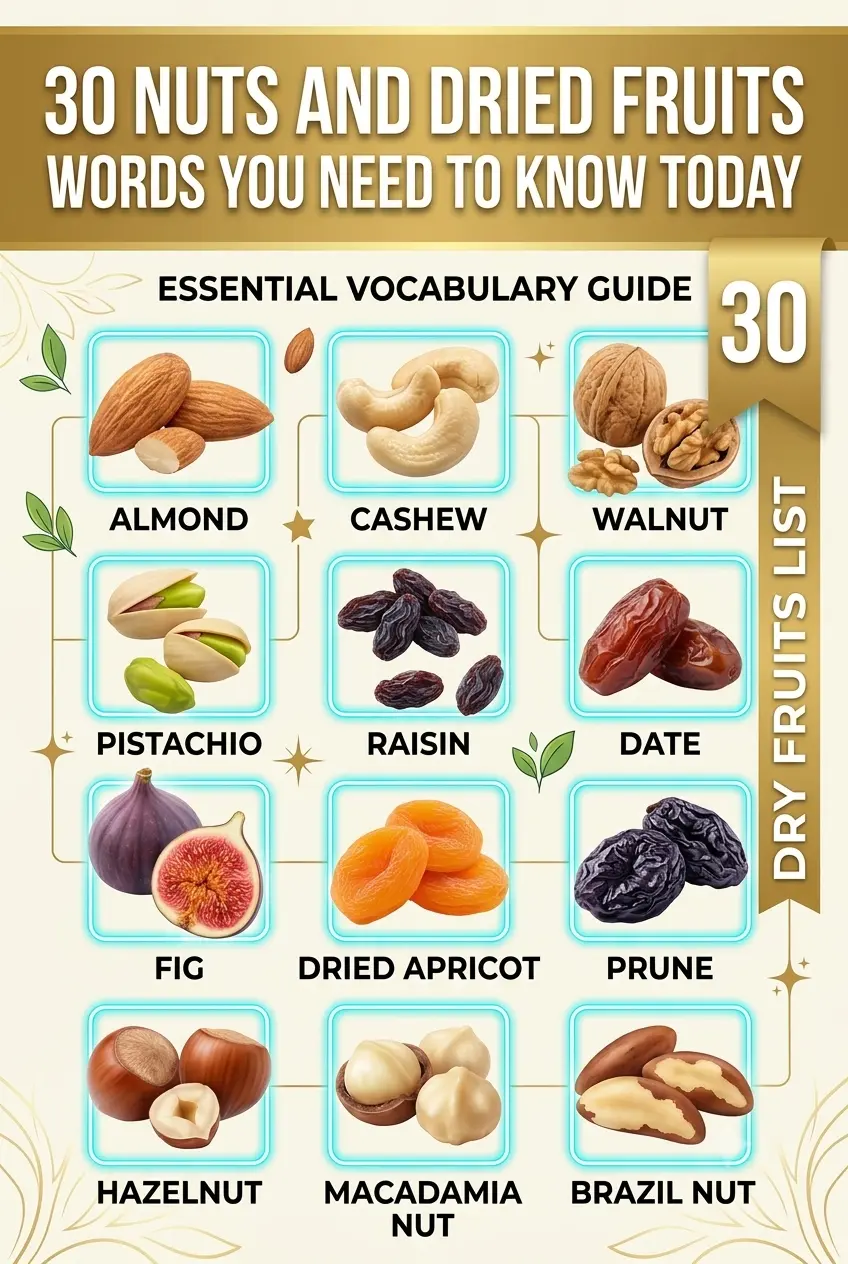
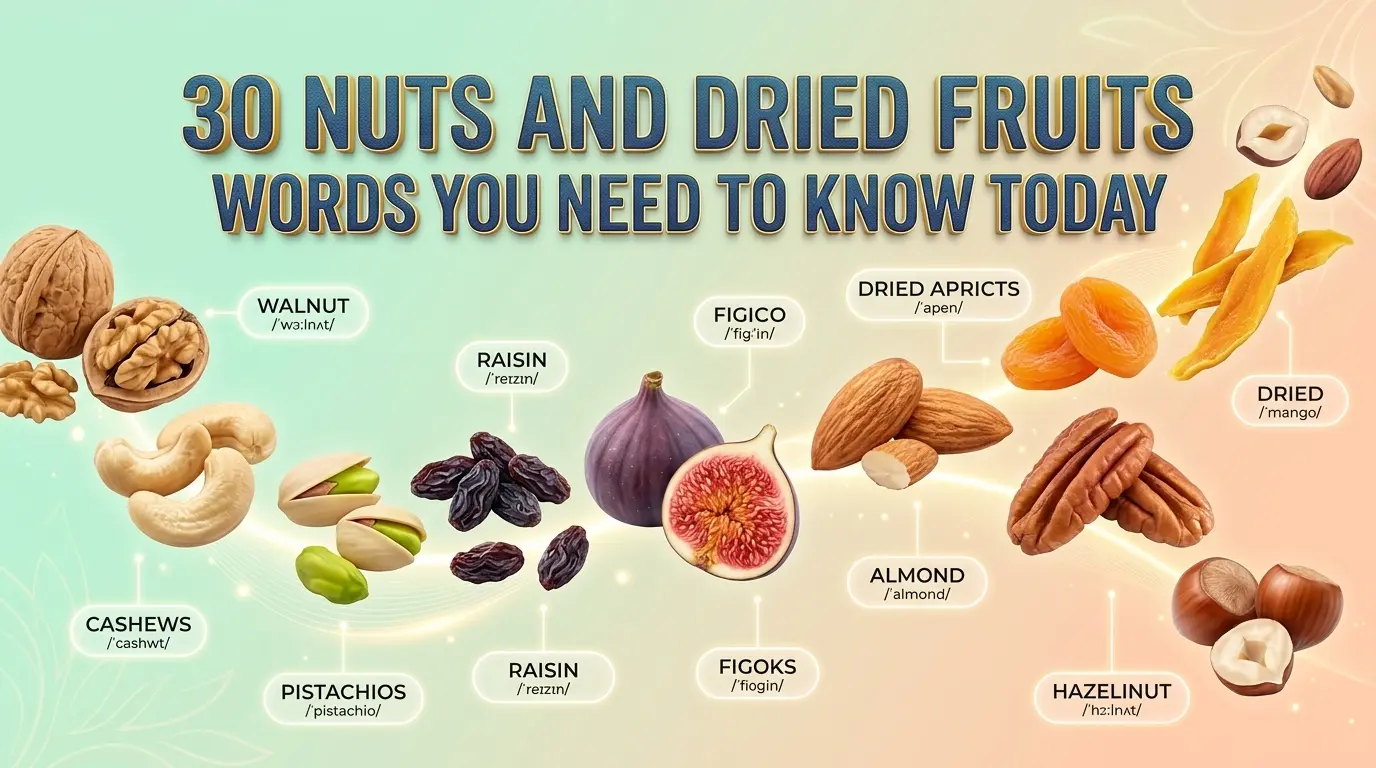
1. Almond
(Pronunciation: ah-mund | From Old French almande, derived from Greek amygdale.)
CRUNCH! That satisfying sound means you just bit into a oval, tan kernel. Farmers shake orchard trees hard to harvest these hard brown shells each autumn season. People love eating them raw or toasted. Simple snacks satisfy fast.
2. Cashew
(Pronunciation: kash-oo | From Tupi acajú, meaning fruit that produces itself.)
Picture a tiny kidney-shaped seed hanging under a bright red false fruit. Workers must carefully shell them because the outer skin contains natural irritants. They taste rich, smooth, and buttery. Curved treats delight everyone.
3. Walnut
(Pronunciation: wawl-nut | From Old English wealhhnutu, meaning foreign nut.)
Crack open the hard, pale brown shell and you will see a tiny brain shape. These wooden-looking seeds grow on high branches inside green husks. Many bakers mix them into fresh banana bread. Brainy shapes pack power.
4. Pistachio
(Pronunciation: pih-stah-shee-oh | From Persian pista, through Greek and Latin.)
Pop! The light tan shell snaps open to show a vibrant green seed inside. Middle Eastern orchards grow these salty treasures on desert trees. People love cracking them open by hand. Green gems taste amazing.
5. Raisin
(Pronunciation: ray-zin | From Old French raisin, meaning grape.)
Warm sunshine bakes plump green grapes on wooden trays until they shrivel dark and sweet. Bakers toss these chewy dark morsels into morning oatmeal bowls. They pack tons of natural sugar. Tiny grapes shrink sweet.
6. Date
(Pronunciation: dayt | From Greek daktylos, meaning finger due to shape.)
Ever wonder how desert travelers stayed full across endless sand dunes? Tall palm trees yield these sticky brown oval fruits in hot climates like the Middle East. They taste like pure caramel candy. Desert sweets fuel journeys.
7. Fig
(Pronunciation: fig | From Old French figue, derived from Latin ficus.)
Soft purple skin hides hundreds of tiny crunching seeds inside a teardrop shape. Ancient farmers dried them on flat rocks under bright afternoon skies. They taste sweet, chewy, and rich. Old treats stay popular.
8. Dried Apricot
(Pronunciation: dryd ay-prih-kot | From Arabic al-barqūq, meaning early-ripe.)
Bright orange discs shine like tiny setting suns on the kitchen counter. Drying fresh orange stone fruits concentrates their natural tangy flavor completely. Kids pack them for school lunches easily. Sunny bites taste bold.
9. Prune
(Pronunciation: proon | From Latin prunum, meaning plum.)
Dark, wrinkled, and super soft, this dried purple plum hides a rich flavor inside. Families keep them in pantries to support healthy digestion every single day. They taste deep and sticky sweet. Dark plums age well.
10. Hazelnut
(Pronunciation: hay-zul-nut | From Old English hæsel, meaning hazel shrub.)
A round, smooth brown shell protects this aromatic marble-sized kernel inside. Chocolatiers grind them down with cocoa to make smooth chocolate spreads. Squirrels bury them deep in forest soil. Round nuts flavor treats.
11. Pecan
(Pronunciation: pih-kahn | From Native American Algonquin word, meaning hard-shelled nut.)
Long, dark brown shells hide a buttery, ridged seed inside their smooth walls. Southern bakers use these rich tree seeds to bake famous holiday pies. They taste sweet and rich. Southern trees yield gold.
12. Macadamia Nut
(Pronunciation: mak-uh-day-mee-uh nut | Named after chemist John Macadam.)
Whoosh! A heavy industrial press exerts huge force to crack this super thick shell open. These round white kernels grow in sunny tropical places like Hawaii and Australia. They offer a rich, creamy crunch. Smooth white spheres cost more.
13. Pine Nut
(Pronunciation: pyn nut | From Old English pin, derived from Latin pinus.)
Tiny ivory seeds hide deep inside heavy wooden pinecones high in evergreen forests. Harvesters carefully gather cones to extract these delicate, oily treasures. Chefs crush them to make fresh green pesto sauce. Tiny seeds pack creaminess.
14. Chestnut
(Pronunciation: ches-nut | From Greek kastanea, after an ancient city.)
Crackling fires roast these plump, smooth brown seeds during cold winter evenings. Unlike hard tree nuts, their soft yellow center tastes starchy and sweet. Street vendors sell them in paper bags. Winter snacks warm hands.
15. Brazil Nut
(Pronunciation: bruh-zil nut | Named after the South American country.)
Picture a huge wooden pod the size of a cannonball falling from rainforest trees. Inside, dozen triangular seeds sit tightly packed like orange slices. Eating just one provides tons of natural selenium content. Giant pods drop treasures.
16. Dried Cranberry
(Pronunciation: dryd kran-behr-ee | From German kraanbere, meaning crane berry.)
Deep red, wrinkled bits burst with a mix of tart and sweet fruit juice. Farmers float fresh red berries in watery bogs before drying them out. People sprinkle them over fresh green salads. Tart red bites pop.
17. Dried Cherry
(Pronunciation: dryd chehr-ee | From Greek kerasos, an ancient cherry region.)
Chewy dark red spheres offer a strong punch of summer fruit flavor year-round. Drying sour red cherries preserves their rich juice inside a dense, sweet bite. Bakers mix them into dark chocolate cookies. Deep red sweets shine.
18. Dried Blueberry
(Pronunciation: dryd bloo-behr-ee | Old English blaw paired with berry.)
Small dark blue pebbles pack a surprisingly sweet punch despite their tiny size. Drying fresh blueberries preserves their rich color and deep antioxidant power without spoiling. Kids enjoy them mixed with cereal. Small blue beads delight.
19. Dried Coconut
(Pronunciation: dryd koh-kuh-nut | From Portuguese coco, meaning grinning face.)
Snow-white shreds smell like a sunny tropical beach afternoon. Workers grate fresh coconut meat and dry it into light, crispy flakes. Bakers dust them over frosted birthday cakes. White flakes taste sweet.
20. Dried Kiwi
(Pronunciation: dryd kee-wee | Named after the flightless New Zealand bird.)
Bright green discs show tiny black seeds radiating out like a starburst pattern. Drying slices of this furry fruit creates a chewy snack with a tart edge. It looks cool on fruit platters. Green circles look neat.
21. Dried Mango
(Pronunciation: dryd mang-goh | From Tamil mankay, through Portuguese.)
Golden orange strips bend and stretch like chewy fruit leather in your hand. Tropical sunshine dries thick mango slices into sweet, tangy snacks. Exploring cool words that start with g can help you describe these golden strips. Chewy yellow strips satisfy.
22. Dried Pineapple
(Pronunciation: dryd pyn-ap-ul | Spanish piña combined with apple.)
Yellow flower-shaped rings smell strongly of sweet tropical juice. Heat removes the water from fresh pineapple rings, leaving a dense, sweet treat behind. The chewy core feels dense. Yellow rings taste bold.
23. Dried Papaya
(Pronunciation: dryd puh-py-uh | From Taino papáia, a Caribbean language.)
Coral-orange spears look like bright neon candy strips resting inside plastic jars. Tropical growers dry fresh papaya pieces to create a smooth, mild snack. The soft texture bites easily. Orange spears taste gentle.
24. Dried Apple
(Pronunciation: dryd ap-ul | From Old English æppel, meaning general fruit.)
Light tan rings feel spongy, soft, and slightly bendable between your fingers. Drying sliced apples with a dash of cinnamon makes a cozy autumn treat. Studying active and passive voice helps you write recipes for them. Soft apple rings crunch.
25. Dried Banana
(Pronunciation: dryd buh-nan-uh | From Wolof banana, a West African word.)
Crunch! Thin yellow chips snap crisply when you bite into them. Deep-frying or baking banana slices creates a crunchy, sweet snack for hiking trips. Kids pack them in school bags. Crunchy chips taste fun.
26. Dried Peach
(Pronunciation: dryd peech | From Latin persicum, meaning Persian fruit.)
Wrinkled orange halves display deep red centers where pits used to sit. Drying fresh fuzzy peaches locks in their rich summer sweetness for winter months. They taste chewy and very sweet. Soft peach halves satisfy.
27. Dried Pear
(Pronunciation: dryd pehr | From Latin pirum, meaning pear.)
Pale yellow teardrops feel dense, chewy, and smooth as you bite in. Sliced pears dry slowly into sweet, elegant treats that pair well with cheese. Their delicate flavor stays mild. Chewy pear slices delight.
28. Dried Mulberry
(Pronunciation: dryd mul-behr-ee | From Latin morum paired with berry.)
Tiny beige berries look like small, bumpy wooden beads resting together. Silkworms feed on mulberry leaves while farmers harvest these sweet, crunchy berries to dry. They taste like herbal honey. Bumpy berries crunch light.
29. Dried Strawberry
(Pronunciation: dryd straw-behr-ee | Old English streawberige, wild berry.)
Red heart shapes shrink into dark, chewy slices packed with intense sweet flavor. Reading about red fruits names makes learning about these treats extra fun. Cereal makers toss them into morning breakfast bowls. Red slices taste sweet.
30. Candlenut
(Pronunciation: kan-dul-nut | Named because its oily kernel burns like a candle.)
Round pale kernels contain so much natural oil that ancient villagers lit them like candles. Cooks in Southeast Asia always boil or roast them before grinding them into rich curry pastes. Raw kernels carry mild toxins. Oily nuts burn bright.
Final Thoughts
Every single nut and dried fruit on this list offers a delicious way to fuel your day. Which of these healthy snacks will you try during your next break?