25 Fruits Vocabulary Words You Need to Know Today
A huge shadow zipped across the jungle floor. A loud snap echoed high above the ancient stone temples.
Silence followed. Discovery awaited. In the deep heart of the rainforest, some of the most vibrant fruits grow hidden on giant trees.
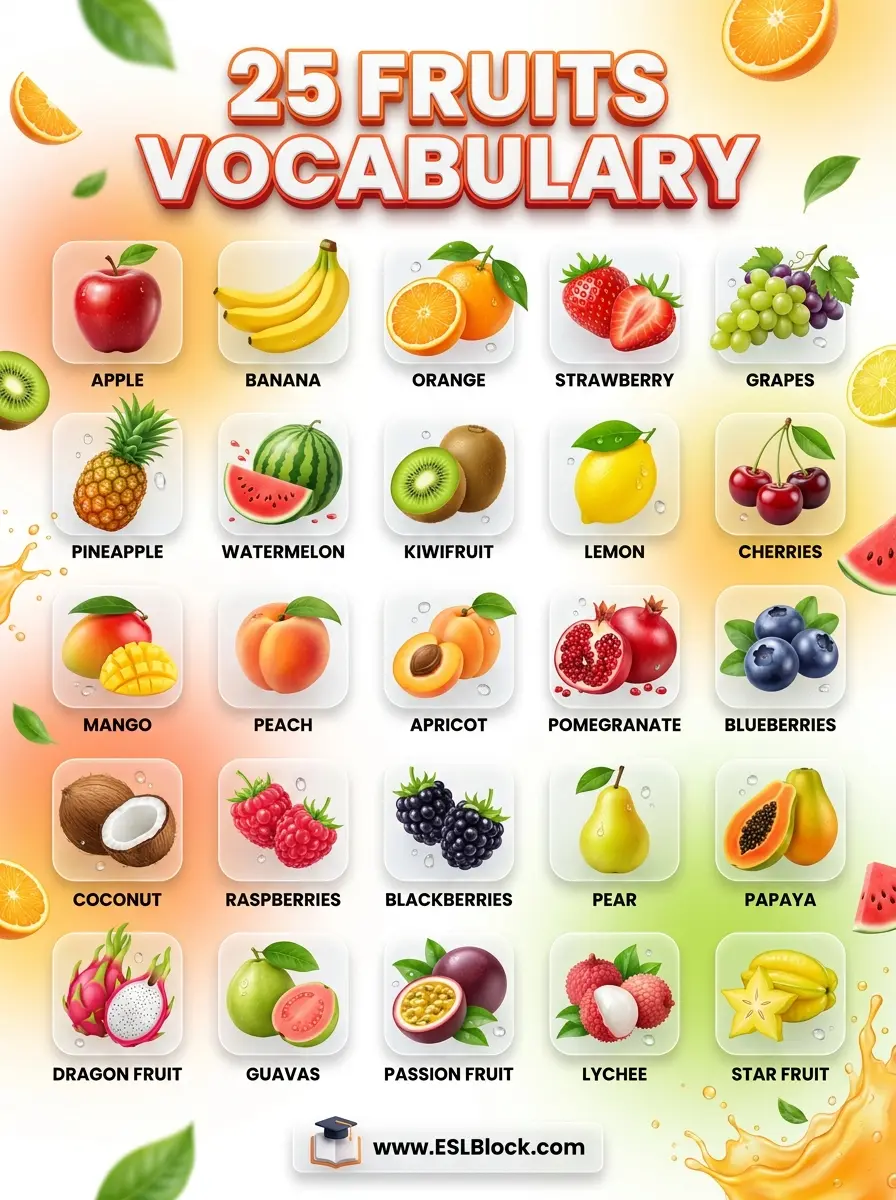
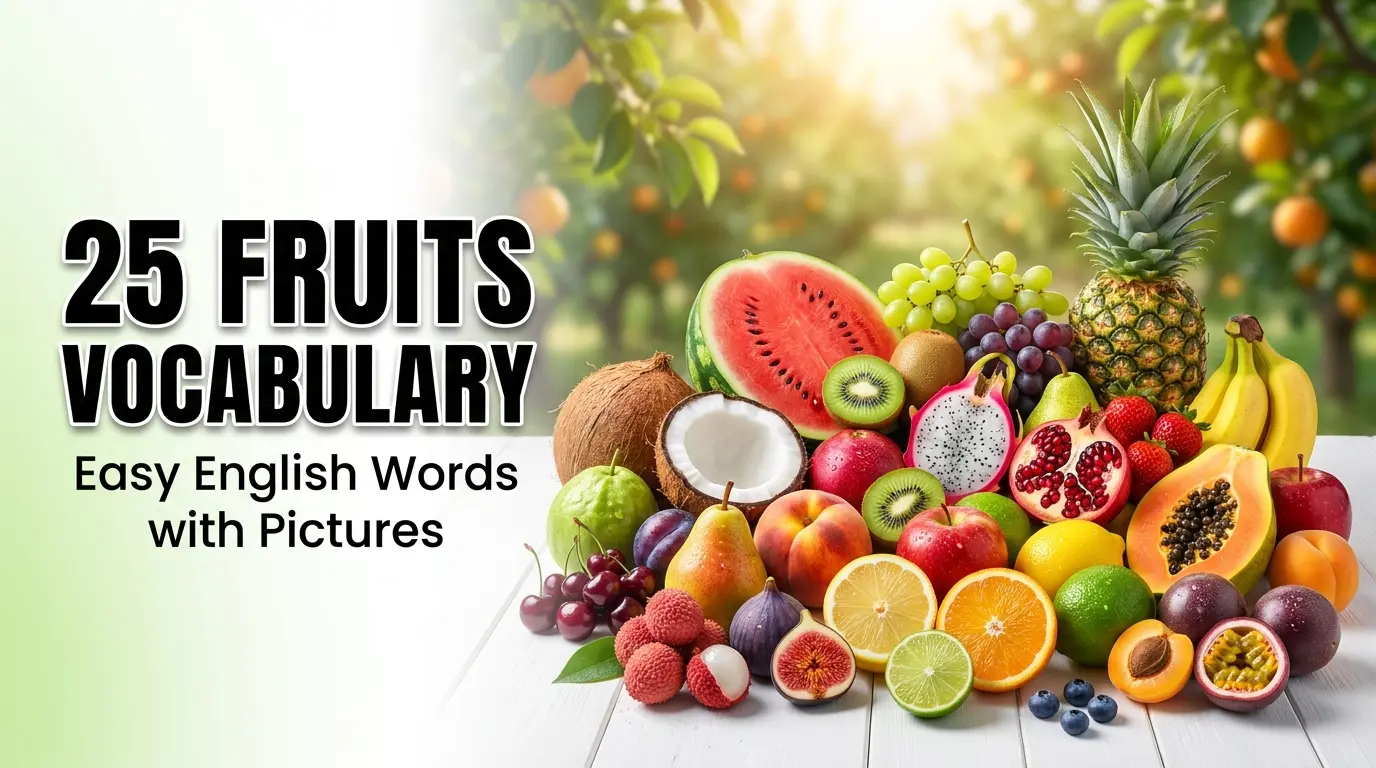
Learning about these foods is fun and makes describing meals much more exciting. When you practice using how adjectives work in class, adding these words makes your writing pop. Let’s explore 25 sweet wonders!
1. Apple
(Pronunciation: ap-ul | From Old English æppel, meaning any round fruit.)
A bright red skin hides sweet, white flesh inside this firm treat. People pick millions of them in cool autumn orchards everywhere each year. They grow on medium trees. Crunch time is now.
2. Banana
(Pronunciation: buh-nan-uh | From Wolof banana, a West African word.)
Slide off the smooth yellow skin and a soft white fruit appears. Huge leaves flap in hot tropical breezes where these curved fruits hang together in big bunches. Monkeys love eating them. Peel one and enjoy.
3. Orange
(Pronunciation: or-inj | From Sanskrit naranga, describing the tree.)
Tear the bumpy skin open and sweet juice sprays your face instantly. Farmers pick these orange globes in sunny citrus groves all winter long across Florida. They hold many small segments. A refreshing snack.
4. Mango
(Pronunciation: mang-goh | From Tamil mankay, through Portuguese.)
Picture this: soft, orange fruit so juicy you must eat it outside. These large, oblong fruits grow on massive green tropical trees on hot continents. The inside flesh tastes like sweet sunshine. Summer rides on this.
5. Grapes
(Pronunciation: grayps | From Old French grape, a bunch of fruit.)
Have you ever noticed these tiny purple or green spheres pop when you bite down? They grow together tightly on twining woody vines in beautiful sunny vineyards. Some folks dry them into raisins. Pick a bunch today.
6. Pineapple
(Pronunciation: pyn-ap-ul | Named for looking like a pine cone and tasting like an apple.)
Imagine a spiky brown plant sitting directly on the ground in warm soil. A thick skin protects the sweet yellow rings inside this spiky tropical crown. It has unique red fruits names companions sometimes nearby. Sweet meets sharp here.
7. Watermelon
(Pronunciation: waw-ter-mel-un | Named for its huge water content.)
A quick action scene happens when a sharp knife splits the giant green rind open. Everyone sees bright red flesh and tiny black seeds inside the cool center. It contains mostly water. Picnic time is better.
8. Strawberry
(Pronunciation: straw-behr-ee | Old English streawberige, wild berry.)
Tiny little white flowers bloom before these bright red heart shapes appear. This small, sweet ground fruit hides hundreds of tiny seeds right on the outside skin. It has no main keyword connections. Simply perfect berries.
9. Pear
(Pronunciation: pehr | From Latin pirum, meaning pear.)
Something a child might notice first is the unique bell shape of this fruit. It grows on beautiful ornamental trees and feels slightly gritty when you bite the sweet flesh. The skin stays very soft. A gentle sweetness.
10. Peach
(Pronunciation: peech | From Latin persicum, meaning Persian fruit.)
Feel the surprisingly soft, fuzzy skin of this warm orange fruit in your hand. It has a very large, hard stone inside the sweet yellow center flesh. People enjoy them baked. Fuzzy joy awaits you.
11. Cherry
(Pronunciation: chehr-ee | From Greek kerasos, an ancient cherry region.)
An unexpected comparison is two tiny red balloons hanging from one green stem. These small, bright red fruits hold a tiny seed and taste extremely sweet. They ripen early summer. Nature’s candy.
12. Kiwi
(Pronunciation: kee-wee | Named after the furry brown New Zealand bird.)
You see a dull, furry brown skin, so you slice it open curiously. Surprisingly, vibrant green flesh with tiny black seeds bursts with bright color inside. It tastes tangy and sweet. A little green wonder.
13. Papaya
(Pronunciation: puh-py-uh | From Taino papáia, a Caribbean language.)
Tear the thin skin off to reveal a coral-orange center full of shiny black seeds. Tropical warmth helps this long, heavy fruit grow on short, sturdy trees easily. It aids digestion. Exotic treats are great.
14. Coconut
(Pronunciation: koh-kuh-nut | From Portuguese coco, meaning grinning face due to shell appearance.)
A child might hear the sloshing sound of water inside the rock-hard brown shell. People crack the hard outer layer to find sweet white meat and refreshing water. It floats across oceans. Island life provides this.
15. Pomegranate
(Pronunciation: pom-uh-gran-it | From Latin pomum granatum, seeded apple.)
A tiny real-life moment is tapping the leathery rind to extract hundreds of red seeds. Each seed bursts with tart, sweet juice inside your mouth at once. This Middle Eastern native grows in hot climates. A seeded jewel.
16. Guava
(Pronunciation: gwah-vuh | From Arawak guayaba, a Caribbean word.)
Unexpectedly, a simple green skin hides deep pink flesh inside this tropical fruit. It has many small, edible seeds and smells very strong and sweet when ripe. Birds eat them greedily. A tropical delight.
17. Lemon
(Pronunciation: lem-un | From Arabic laymun, general term for citrus.)
The smell of fresh, clean sunshine fills the air when you slice this yellow orb. It tastes incredibly sour and is the cousin to some red fruits on other trees. Cooks use the juice often. Sour power helps recipes.
18. Lime
(Pronunciation: lym | From Sanskrit nimbu, describing the lime tree.)
Have you ever used this small green fruit in spicy salsa or cool drinks? It looks like a small lemon but tastes uniquely tangy and slightly more bitter. The inside flesh is light green. Zest it for flavor.
19. Lychee
(Pronunciation: lee-chee | From Chinese lìzhī, meaning to part with skin.)
A bumpy, bright red skin splits open to show a translucent, pearly white fruit. These small Asian fruits grow on attractive trees and are popular during Chinese New Year celebrations. They taste extremely sweet. A little sweet globe.
20. Plum
(Pronunciation: plum | From Latin prunum, meaning plum.)
A surprising observation is the natural white powder covering the deep purple skin. Slicing it open reveals yellow, sweet flesh and a central stone pit. Some people dry them into prunes. Purple power is nice.
21. Apricot
(Pronunciation: ay-prih-kot | From Arabic al-barqūq, meaning early-ripe.)
This small, fuzzy orange fruit is the tiny, sweet cousin to the peach. Heat dries it into a popular, chewy snack enjoyed by hikers worldwide. It ripens very early summer. A small orange jewel.
22. Fig
(Pronunciation: fig | From Latin ficus, meaning fig.)
A tiny real-life moment is opening this soft, teardrop-shaped fruit with your fingers. Inside, hundreds of tiny, crunching seeds make a unique texture while you eat the sweet pulp. It was one of the first farmed fruits. History tastes sweet.
23. Dragon Fruit
(Pronunciation: drag-un froot | Named for the vibrant, scale-like spikes on the skin.)
The name says it all: a wild pink fruit with green scales that looks like a dragon’s egg. Slice the unique skin to reveal white flesh speckled with thousands of tiny black seeds. It grows on a cactus. Magical looks are neat.
24. Passion Fruit
(Pronunciation: pash-un froot | Named after missionaries’ religious interpretations of the flowers.)
You find a smooth purple skin, so you break it open with wonder. Surprisingly, intense orange pulp and crunchy seeds are inside this fragrant fruit. The flavor is very strong and sweet. Zesty passion is cool.
25. Blueberries
(Pronunciation: bloo-behr-ee | Named for their dark blue color.)
These tiny blue globes grow on beautiful bushes on cool, northern hillsides every summer. Picking them is fun because they pop easily in your hands and mouth. They make great pies. Sweet blue treats await.
Final Thoughts
Every single fruit on this list is a healthy way to add sweet natural treats to your daily life. Which of these sweet wonders will you try first at snack time today?