atOptions = { 'key' : '1ebe94c9467afa987659a5c8bded9050', 'format' : 'iframe', 'height' : 50, 'width' : 320, 'params' : {} };
10 Red Fruits Names with Pictures and Easy Facts
A splash of red caught my eye.
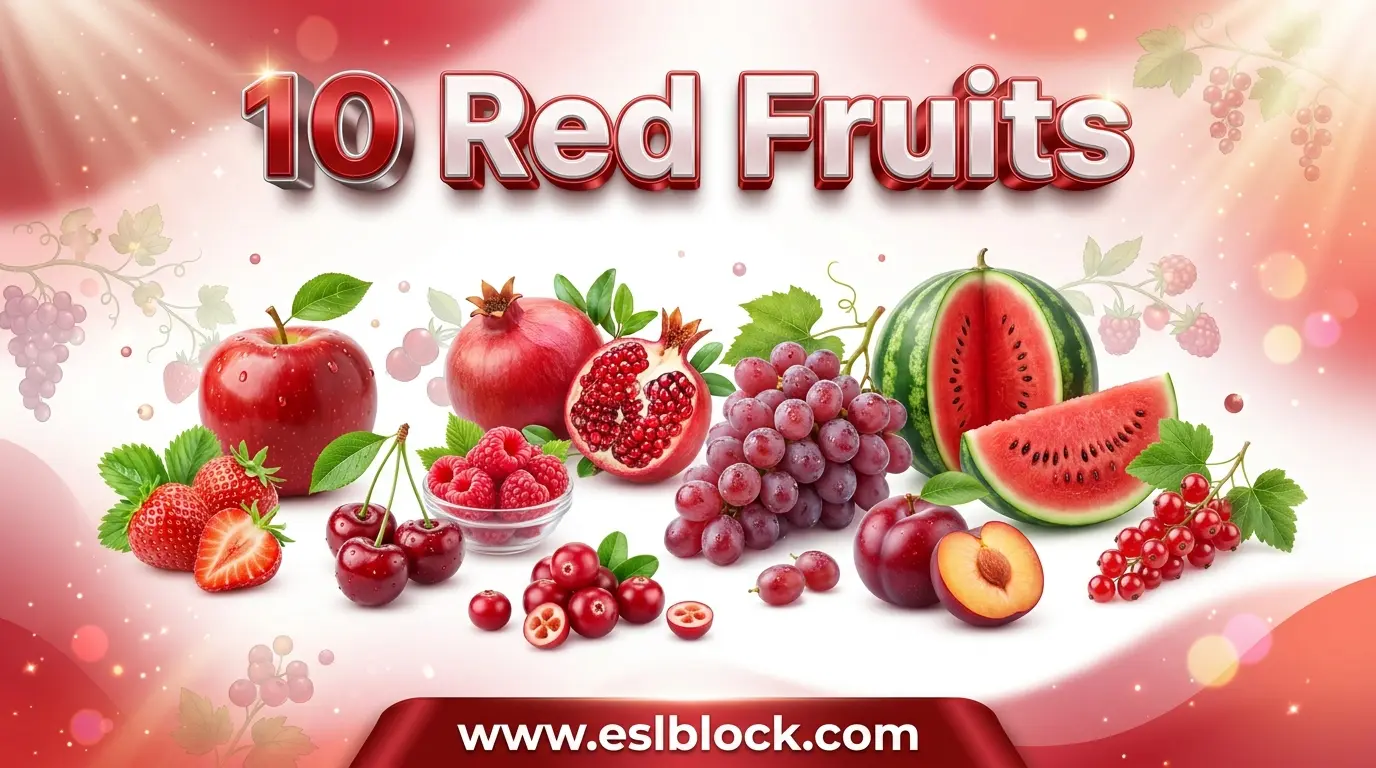
It wasn’t paint. It wasn’t a toy. It was a basket filled with bright, juicy fruit. Every piece looked different, yet every one shared the same bold color. That’s the fun of learning 10 Red Fruits.
Red fruits are some of the most popular foods in the world. They’re colorful, tasty, and packed with nutrients. As you learn their names, you’ll also build stronger English vocabulary. According to the U.S. Department of Agriculture, eating a variety of fruits is an important part of a healthy diet.
If you’re improving your English, you’ll also enjoy learning Parts of Speech with Examples, Verb Tenses, and Cool Words That Start with A.
Let’s discover ten delicious red fruits you’ll see almost everywhere.
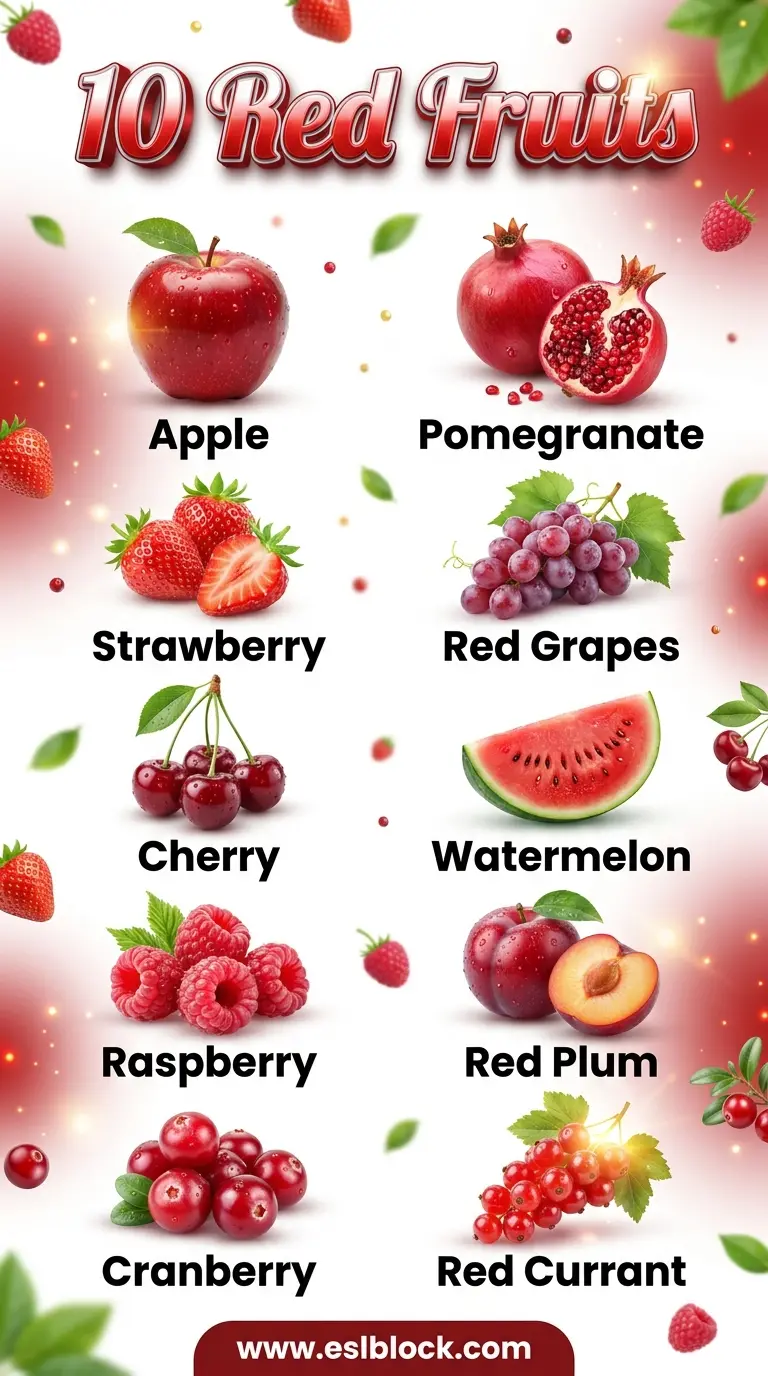
1. Apple
(Pronunciation: AP-uhl | Origin: From Old English æppel, meaning fruit.)
An apple often finds its way into lunch boxes around the world. One crisp bite is enough to wake up your taste buds.
Apple is a round fruit that grows on trees and comes in several shades of red, green, and yellow. The Encyclopaedia Britannica explains that apples have been grown for thousands of years.
Simple. Sweet. Timeless.
2. Strawberry
(Pronunciation: STRAW-ber-ee | Origin: The name appeared in Old English many centuries ago.)
Tiny seeds cover the outside instead of hiding inside. That’s one reason strawberries are so unique.
A strawberry is a soft, bright red fruit with a sweet taste and fresh aroma. It’s often used in cakes, smoothies, and ice cream. The Royal Horticultural Society shares useful growing tips for strawberries.
Small fruit. Big flavor.
3. Cherry
(Pronunciation: CHAIR-ee | Origin: From Latin cerasum, the ancient name for the fruit.)
A bowl of cherries never stays full for long. People can’t resist their sweet, juicy taste.
A cherry is a small round fruit with smooth red skin and a hard seed inside. Many cherry trees bloom with beautiful flowers each spring. The Missouri Botanical Garden highlights their beauty and history.
One bite brings a smile.
4. Raspberry
(Pronunciation: RAZ-ber-ee | Origin: The word has been used in English since the 1500s.)
Look closely at a raspberry. It’s actually made of many tiny fruitlets packed together.
A raspberry is a soft red berry with a slightly sweet and tangy flavor. People enjoy it fresh or in jams and desserts. The Britannica describes raspberries as one of the world’s favorite berries.
Tiny pieces. Wonderful taste.
5. Cranberry
(Pronunciation: KRAN-ber-ee | Origin: Early settlers believed the flower looked like a crane’s head.)
Cranberries may look sweet, but the first bite surprises almost everyone. They’re naturally quite tart.
A cranberry is a small, deep red berry that grows in cool wet areas. It is commonly used to make juice, sauces, and dried fruit snacks. The Ocean Spray explains how cranberries are harvested from flooded fields.
Bright color. Bold flavor.
6. Pomegranate
(Pronunciation: POM-gran-it | Origin: From Latin pomum granatum, meaning “seeded apple.”)
Cut open a pomegranate and hundreds of shiny red seeds appear like tiny jewels. It’s one of nature’s most beautiful surprises.
A pomegranate is a round fruit with a thick skin and juicy ruby-red seeds called arils. It has been enjoyed for thousands of years in many cultures. The Royal Botanic Gardens, Kew shares the fascinating history of this ancient fruit.
Every seed is a tiny treasure.
7. Red Grape
(Pronunciation: red grayp | Origin: From Old French grape, referring to fruit clusters.)
One grape quickly becomes another. Before you know it, the whole bunch has disappeared.
Red grapes grow in hanging clusters on vines and have smooth skin with juicy flesh inside. People eat them fresh or use them to make juice, raisins, and jams. The California Table Grape Commission explains how grapes are grown and harvested.
Nature loves sharing in bunches.
8. Watermelon
(Pronunciation: WAW-ter-mel-un | Origin: Named for its high water content.)
Picture this on a hot summer afternoon. One cold slice of watermelon makes everything feel cooler.
A watermelon is a large fruit with a thick green rind and sweet red flesh filled with black or brown seeds. It contains plenty of water, making it a refreshing summer snack. The National Watermelon Promotion Board offers interesting facts and recipes.
Summer tastes like watermelon.
9. Red Plum
(Pronunciation: red plum | Origin: From Old English plume, borrowed from Latin prunum.)
The smooth skin shines in the sunlight. Then comes the first juicy bite with just a little tang.
A red plum is a small round fruit with deep red or purple skin and sweet yellow or red flesh. It grows on plum trees and is enjoyed fresh or dried. The Britannica explains the many varieties grown around the world.
Sweetness hides beneath the skin.
10. Red Currant
(Pronunciation: red KUR-unt | Origin: The name comes from the city of Corinth, where similar dried fruits were traded.)
Tiny berries hang together like sparkling red pearls. They’re almost too pretty to pick.
A red currant is a small, bright red berry with a tart flavor. It is often used in jellies, desserts, and fruit sauces because of its rich taste and vibrant color. The Royal Horticultural Society provides useful growing information for currant plants.
Small berries leave a lasting impression.
Learning fruit names is one of the easiest ways to build your English vocabulary. Every new word helps you speak with more confidence and understand the world around you.
Keep exploring English with Active and Passive Voice, 12 Verb Tenses Worksheets, Sentence Structures Worksheets, and Types of Sentences Worksheets. One new word today can open a hundred conversations tomorrow.