Air Transport Vocabulary: 20 Flying Machines You Need to Know
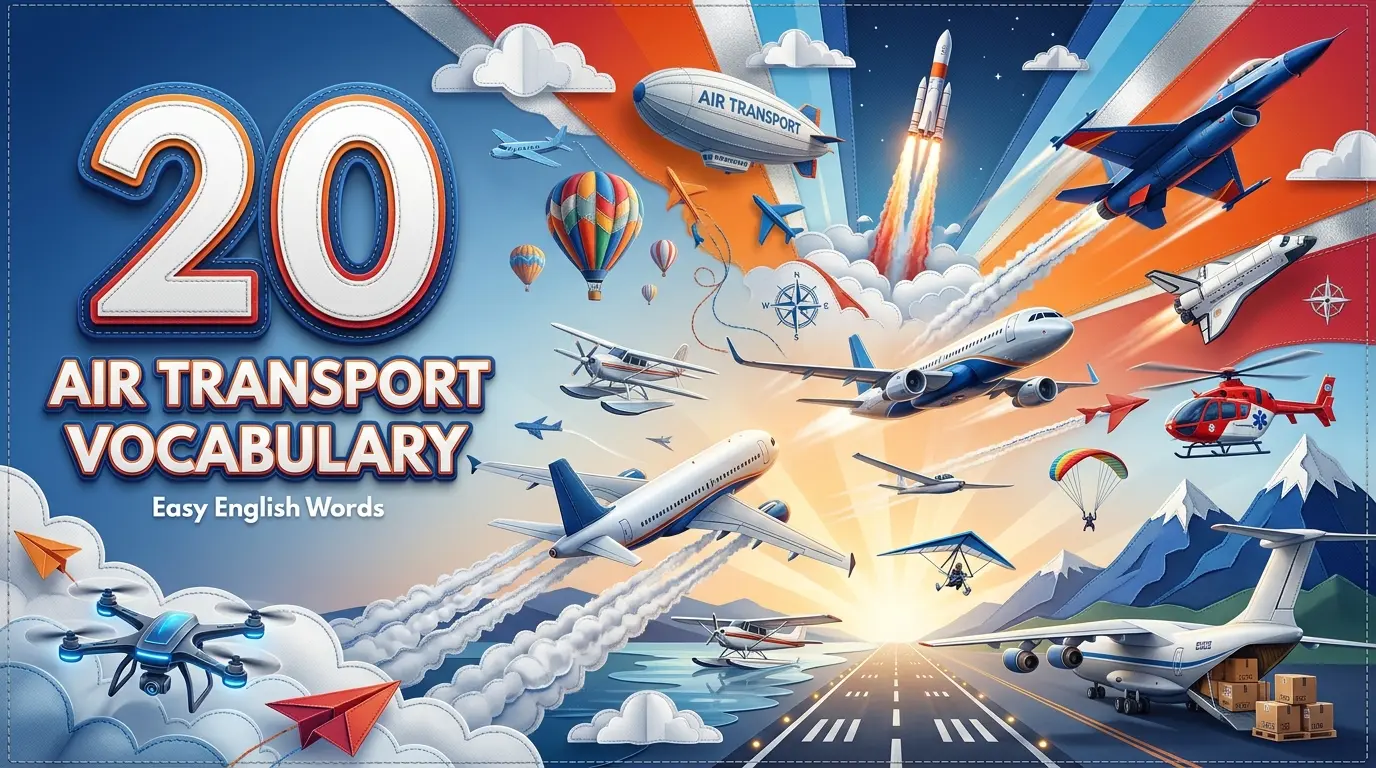
Jet engines roared. Thick white smoke billowed across the concrete runway.
The nose pitched upward sharply. Wonder filled the sky. Thousands of feet above ground, incredible flying machines move people and cargo every single day.
Learning air transport vocabulary helps you talk about travel, space flight, and aviation easily.
Just as practicing what are demonstrative adjectives makes your English sentences clear, mastering flying machine names expands your vocabulary skills. Let’s explore 20 sky machines!
20 Air Transport Vocabulary
- Airplane: Long metal wings lift heavy bodies through soft white clouds. Passengers look out small round windows during long international flights. Metal wings fly high.
- Helicopter: Spinning rotor blades chop the sky air with loud rhythmic thumping sounds. Vertical takeoff lets them land on hospital roofs safely according to Britannica. Whirring rotors hover still.
- Jet: Powerful turbine engines push sleek metal fuselages at tremendous flying speeds. High altitudes keep passenger flights smooth above storm weather. Jet motors push fast.
- Fighter Jet: Sharp delta wings slice through high air near supersonic speeds during military exercises. Lightning agility lets skilled pilots perform wild sky loops. Fast jets zoom past.
- Passenger Plane: Hundreds of comfy seats line long interior aisles inside huge commercial airliners. Travelers read books while crossing wide oceans. Big planes carry crowds.
- Cargo Plane: Massive hollow bellies swallow heavy wooden crates and delivery boxes whole. Cargo crews load heavy freight before long midnight flights according to NASA. Huge holds haul goods.
- Private Jet: Plush leather seats offer luxury travel for small private groups flying fast. Business executives work comfortably while skipping long airport lines. Custom jets travel fast.
- Seaplane: Wide pontoon floats attach under airplane fuselages to land on calm lake water. Remote wilderness islands get supplies from these water fliers. Water landings look cool.
- Glider: Long slender wings catch warm rising air thermals without using any engine motor. Pilots steer silently across sunny valley skies for hours. Silent wings glide far.
- Hot Air Balloon: Giant colorful fabric envelopes fill up as roaring propane burners blast heat inside. Wicker baskets float gently over green countryside hills. Warm air drifts slow.
- Blimp: Massive gas-filled envelopes float over sports stadiums carrying bright camera gear. Huge light airships drift slowly through sunny afternoon skies. Floating giants watch games.
- Airship: Rigid interior frames hold large gas bags lifting huge passenger cabins aloft. Historic sky giants once carried ocean travelers slowly across seas. Framed blimps float high.
- Drone: Four small spinning propellers whir loudly as tiny camera lenses record aerial footage. Operators steer small lightweight quadcopters using hand controllers according to National Geographic. Tiny props spin fast.
- Hang Glider: Triangular fabric wings hold brave pilots soaring off high mountain cliffs. Wind currents carry lightweight gliders across deep mountain valleys. Sky pilots fly free.
- Paraglider: Large curved parachute canopy wings inflate as pilots run down steep grassy hills. Understanding wind motion feels as exciting as mastering what are possessive adjectives. Soft wings float down.
- Gyrocopter: Unpowered top rotors spin freely while small rear propellers push light frames forward. Open cockpits give pilots amazing views of countryside paths. Small rotors turn fast.
- Ultralight Aircraft: Tiny lightweight frames carry single pilots under small lawnmower-sized engines. Learning flying terms pairs naturally with reviewing what are proper adjectives. Tiny engines buzz loud.
- Space Shuttle: Winged space planes glided back to Earth runways after completing orbital missions. Astronauts lived inside while studying distant stars according to the Smithsonian Institution. Winged ships explore space.
- Rocket: Massive fire columns blast downward as heavy steel tubes launch toward deep space.
- Helicopter Ambulance (Air Ambulance): Bright red medical choppers land on busy highways to rescue injured patients fast. Onboard medics treat emergency cases while flying toward hospitals. Emergency choppers save lives.
Exploring space travel terms feels just as rewarding as checking out negative adjectives or reviewing adjectives to describe yourself.
Final Thoughts
Every single air transport vehicle on this list helps us explore skies and reach far corners of our world. Which of these amazing flying machines would you love to ride next?