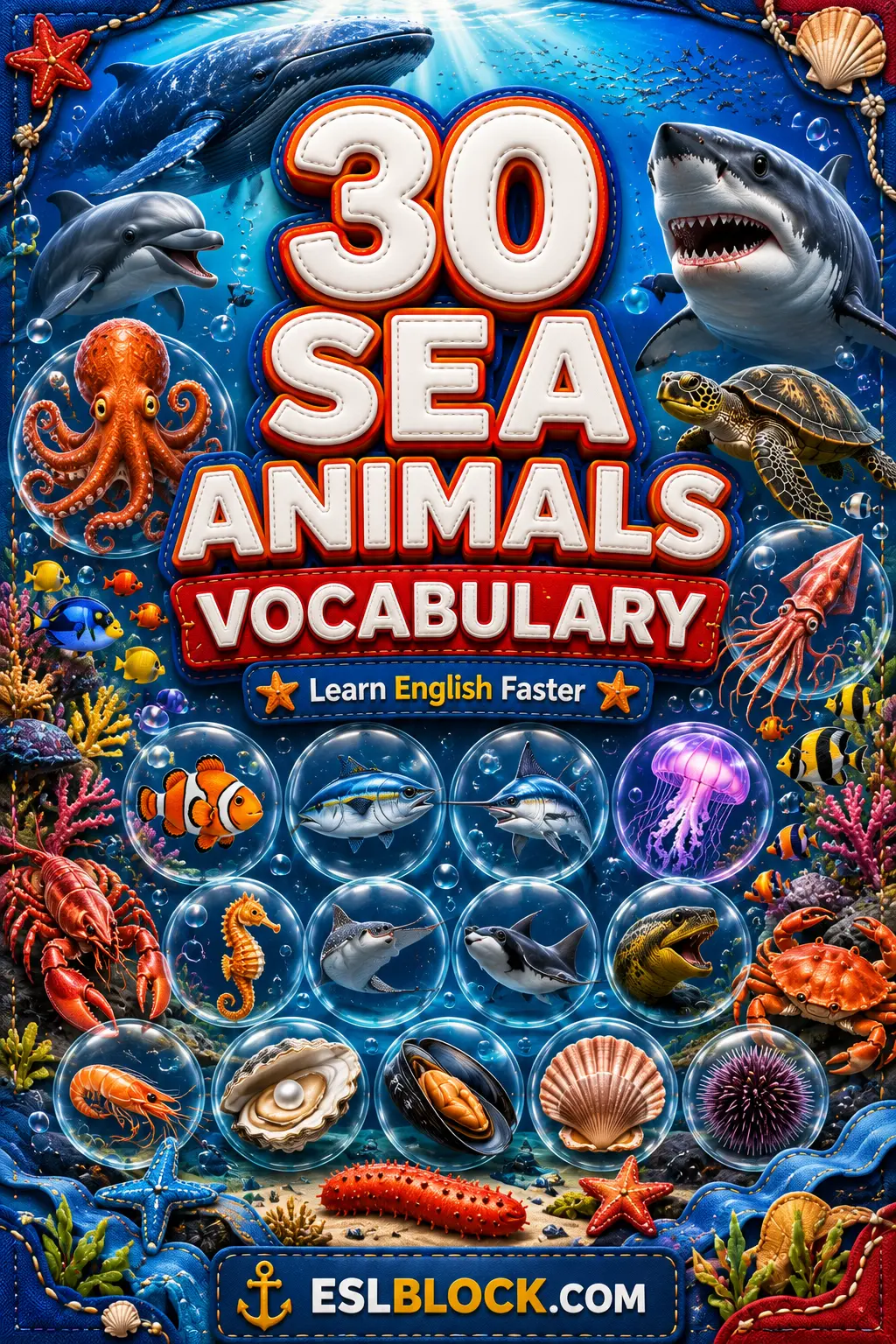
Essential Vocabulary Guide: 30 Common Sea Animals and Facts
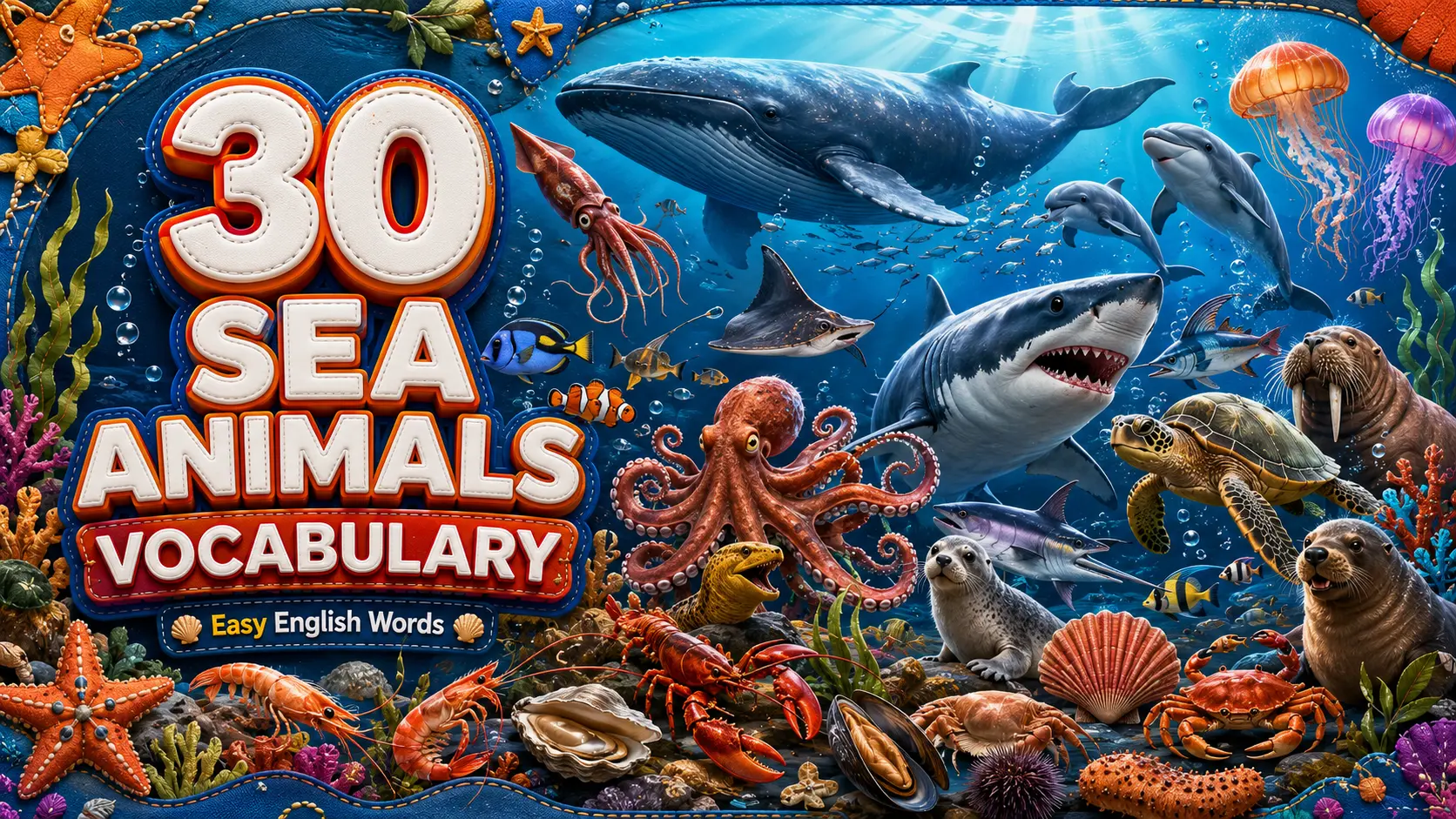
Cold water churned fast. A massive shadow passed under the quiet boat.
Bubbles rose quickly. Pure wonder followed. Beneath blue ocean waves, incredible creatures explore deep saltwater habitats every single day.
Learning sea animals vocabulary helps you talk about ocean life, beach trips, and underwater nature shows easily.
Just as practicing what are descriptive adjectives brings writing to life, learning marine terms expands your daily English skills. Let’s explore 30 ocean creatures!
30 Common Sea Animals
- Shark: Sharp triangular teeth line powerful jaws inside these ocean hunters. Sleek grey bodies swim constantly to keep water moving through gills. Ocean predators rule depths.
- Whale: Giant blows of wet mist shoot skyward as these massive mammals surface for air. According to National Geographic, blue whales are the largest animals on Earth. Ocean giants swim far.
- Dolphin: Playful clicks echo underwater while grey bodies leap high over ocean waves. These smart mammals travel together in friendly pods. Wave jumpers love playing.
- Octopus: Eight flexible arms sweep across sandy sea floors looking for small crabs. Soft squishy bodies change colors instantly to hide from danger. Eight arms hide well.
- Squid: Ten long tentacles shoot these torpedo-shaped sea creatures backward through dark deep waters. Dark ink clouds confuse hungry fish during dangerous chases. Ink sprays confuse enemies.
- Jellyfish: Clear bell-shaped bodies float gently along warm ocean currents. Long trailing tentacles carry stinging cells to catch tiny floating food. Floating bells sting fast.
- Starfish: Five pointed arms spread outwards like bright stars resting on shallow tide pool rocks. Small tube feet underneath help them crawl over stones slowly. Sea stars stick tight.
- Seahorse: Curved tails anchor these tiny bony fish onto swaying green sea grass. Male pouch pockets carry developing babies safely until birth. Tiny horses swim upright.
- Sea Turtle: Smooth paddle-like flippers propel heavy shells through warm tropical ocean waters. Female turtles crawl onto sandy beaches to bury round white eggs. Ocean gliders nest ashore.
- Seal: Smooth grey fur keeps these playful marine mammals warm in chilly coastal waters. Sleek bodies dive deep to catch slippery fish for dinner. Coastal swimmers dive deep.
- Sea Lion: External ear flaps and strong front flippers help these noisy creatures walk on rocky shores. Playful groups bark loudly while basking under warm sunshine. Loud barkers love rocks.
- Walrus: Long ivory tusks help these giant arctic mammals pull heavy bodies onto floating ice sheets. Thick blubber keeps them warm in freezing polar seas. Tusked giants rest cold.
- Stingray: Flat diamond-shaped bodies glide smoothly over sandy ocean floors like underwater kites. Sharp venomous tail spines protect them from larger sharks. Flat gliders hide below.
- Manta Ray: Massive wing-like fins flap gracefully through open ocean waters. Large open mouths scoop up microscopic plankton while swimming. Giant rays glide peacefully.
- Clownfish: Bright orange scales with white stripes make these small fish stand out in coral reefs. Venomous sea anemone tentacles protect them according to Britannica. Stripey fish stay safe.
- Tuna: Sleek silver bodies swim at incredible speeds through deep open ocean waters. Strong tail muscles propel them across vast distance migrations daily. Fast swimmers move far.
- Salmon: Silver scales turn reddish as these strong fish swim upstream against swift river currents. Jumping over waterfalls helps them reach spawning grounds. River jumpers swim home.
- Swordfish: Long pointed bill structures extend forward like sharp swords from giant blue bodies. Fast ocean predators slash through schools of smaller fish easily. Sword beaks strike fast.
- Eel: Long snakelike bodies slither through dark cracks inside coral reefs. Sharp teeth snap at passing fish from hidden rocky burrows. Hidden slitherers hide deep.
- Lobster: Large powerful claws extend forward from hard shelled bodies crawling over rocky ocean beds. Long feelers sense movement in dark sea trenches. Clawed crawlers stay low.
- Crab: Hard round shells protect these flat sea creatures walking sideways across sandy tide beaches. Strong pinching claws crush small shellfish for food. Sideway walkers pinch hard.
- Shrimp: Translucent curved bodies swim backward through coastal waters using tiny flexible legs. Learning sea terms pairs well with exploring fruits vocabulary words. Tiny swimmers feed fish.
- Prawn: Slender pink bodies look like larger shrimp swimming through warm tropical estuaries. Long feelers help them search muddy sea floors for food. Pink swimmers stay active.
- Oyster: Rough grey shells clamp tightly together resting on shallow muddy sea bottoms. Shiny natural pearls grow inside these soft shelled mollusks sometimes. Shell roughs hold pearls.
- Mussel: Dark blue shells attach firmly to coastal rocks using strong sticky threads. Water filters through their shells picking up microscopic food particles. Blue shells stick tight.
- Clam: Smooth hinged shells bury deep inside wet beach sand at low tide. Strong muscular feet help them dig quickly into wet ground. Sand diggers hide underground.
- Scallop: Fan-shaped ribbed shells snap open and closed to swim away from hungry sea stars. Dozens of tiny blue eyes line shell edges. Fan shells swim quick.
- Sea Urchin: Round spiky globes cover shallow tide pool rocks with sharp defensive needles. Herbivorous sea creatures scrape green algae off stones continuously. Spiky balls stay still.
- Coral: Tiny living polyps build giant colorful reefs over thousands of years according to NOAA.
- Sea Cucumber: Leathery sausage-shaped bodies crawl slowly across sandy ocean floors. Soft creatures filter organic nutrients straight out of sea sand. Soft crawlers clean sand.
Discovering ocean life feels as rewarding as learning transport vehicles words or studying vegetables vocabulary words. Coral reefs protect shores.
Final Thoughts
Every single sea animal on this list makes our oceans a more vibrant and magical place to explore. Which of these fascinating underwater creatures do you hope to see on your next ocean trip?