Learn 50 Wild Animal Names in English The Easy Way
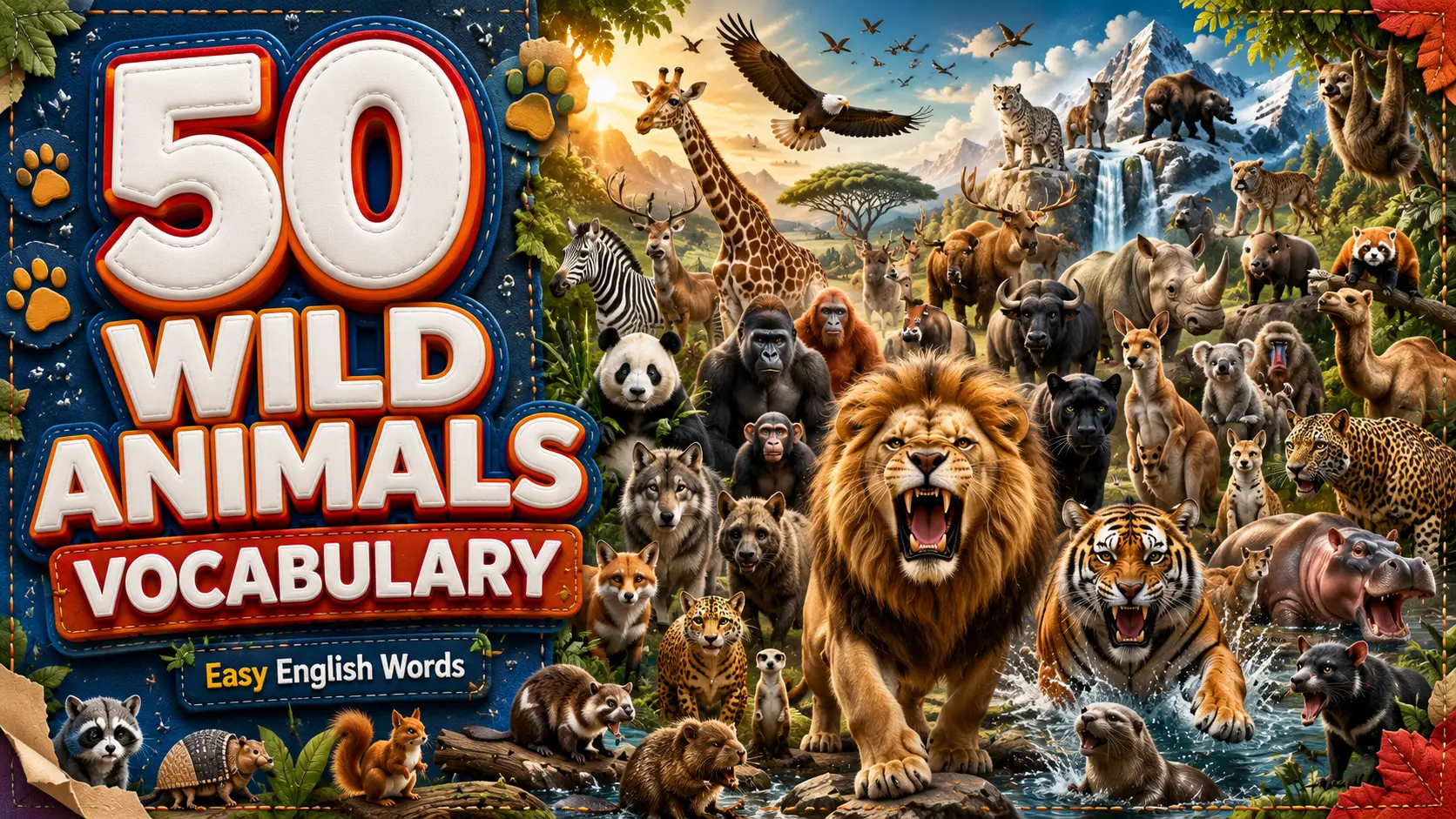
Twigs snapped in the dark jungle. Yellow eyes flashed behind thick vines.
Something massive moved silently. Tension filled the humid air. Deep inside untamed wilderness, incredible creatures rule the land every single day.
Learning wild animals vocabulary helps you describe nature, wildlife documentaries, and zoo adventures clearly.
Just as practicing what are descriptive adjectives makes writing vivid, mastering these animal names expands your speaking skills. Let’s meet 50 amazing wild creatures!
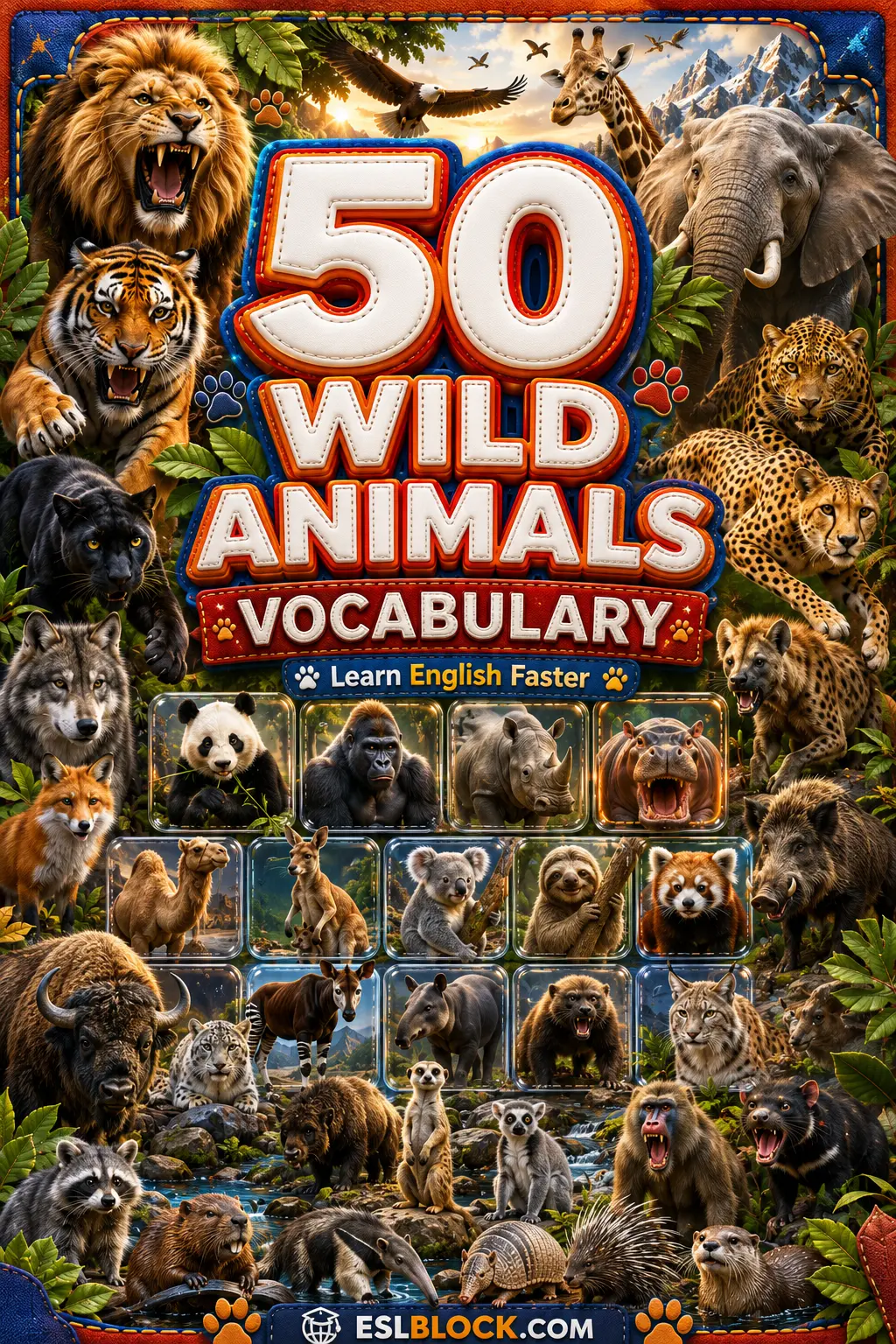
50 Wild Animal Names
- Lion: Golden manes frame muscular heads as loud roars echo across open African savannas. These big cats live in social prides. Kings rule grasslands.
- Tiger: Dark black stripes cross bright orange fur in dense Asian jungles. Solitary hunters stalk prey quietly according to WWF conservationists. Striped hunters swim well.
- Elephant: Massive gray trunks lift heavy logs easily while giant ears fan off summer heat. These giant land mammals travel in herds. Gentle giants remember everything.
- Giraffe: Ultra-long spotted necks reach high tree leaves effortlessly across dry savannas. Purple tongues pluck thorny branches cleanly. Tall towers graze high.
- Zebra: Unique black and white stripes cover whole bodies galloping across dusty plains. Distinct patterns confuse hunting predators easily. Striped horses run fast.
- Rhinoceros: Heavy armor-like skin protects thick bodies roaming grasslands. Strong keratin horns sit right on their noses. Horned giants charge fast.
- Hippopotamus: Enormous pink mouths open wide inside muddy African rivers. Heavy bodies spend hot sunny afternoons underwater. Water giants guard territories.
- Leopard: Rosette-patterned golden coats help these secretive cats blend into tree branches. Powerful climbers haul heavy prey high off ground. Tree sleepers hunt quietly.
- Cheetah: Tear-stained faces mark these slender cats sprinting across open dry grasslands. Incredible acceleration makes them the fastest land mammal. Speed racers catch prey.
- Jaguar: Spot patterns cover compact muscular bodies creeping through dense Amazonian rainforests. Strong jaw bites crush tough turtle shells. Jungle cats swim daily.
- Panther: Deep black fur coats hide stealthy predators stalking prey through dark night jungles. Yellow eyes gleam quietly among shadowy branches. Shadow cats hunt unseen.
- Wolf: Loud haunting howls call pack members together across icy mountain wilderness. Social hunters chase prey together across snow. Pack hunters work together.
- Fox: Bushy red tails trail behind clever predators trotting through suburban woodlands. Sharp ears detect mice scurrying under deep snow. Clever pouncers catch food.
- Bear: Massive furry bodies forage for sweet forest berries and fresh stream salmon. Thick winter coats protect them during long hibernation sleep. Big foragers sleep long.
- Panda: Black and white fur covers gentle bamboo-eating bears living in Chinese mountains. Strong jaws crush tough woody stalks all day long according to Smithsonian’s National Zoo. Bamboo lovers munch continuously.
- Gorilla: Massive silverback leaders guide family troops through misty tropical mountain forests. Strong arms beat heavy chests loudly. Gentle apes guard families.
- Chimpanzee: Highly intelligent apes use sticks to fish termites out of mounds. Clever social groups communicate with vocal screams. Smart primates solve problems.
- Orangutan: Long shaggy orange hair covers these solitary apes swinging through tropical rainforest canopies. Wide arms build leaf nests high above ground. Orange climbers swing free.
- Deer: Slender legs carry timid herbivores leaping gracefully through forest glades. Antlers grow on male heads every spring. Gentle hoppers stay alert.
- Moose: Enormous palmate antlers crown these massive forest giants wading in cold lakes. Long legs help them stride through deep winter snow. Forest giants swim well.
- Elk: Loud bugling calls ring through mountain valleys during crisp autumn mating seasons. Large herds graze open alpine meadows together. Mountain grazers move together.
- Bison: Thick shaggy brown coats protect giant herds roaming open western plains. Heavy heads plow paths through deep snowdrifts. Prairie giants roam far.
- Buffalo: Curved horns sweep wide over heavy heads grazing near muddy waterholes. Wild herds defend young calves fiercely from lions. Water lovers stay together.
- Wild Boar: Sharp curved tusks stick out from bristly snouts digging forest soil. Fiery tempers make these wild pigs dangerous if cornered. Bristly diggers root around.
- Hyena: Odd laughing cries echo across night savannas as packs search for meals. Bone-crushing jaws crush tough food effortlessly. Spotted scavengers hunt loud.
- Jackal: Slender golden bodies trotting across dry scrublands scavenge leftovers quietly. Fast hunters chase small rodents through tall grass. Desert runners search wide.
- Coyote: High-pitched yips ring out across desert canyons under starry night skies. Adaptable hunters live near humans and wild forests alike. Desert howlers adapt fast.
- Camel: High humps store fat reserves for long treks across hot desert dunes. Long eyelashes block blowing sand effortlessly. Desert travelers walk far.
- Kangaroo: Strong hind legs propel giant hops across dry Australian outback plains. Pouch pockets carry tiny joey babies safely. Powerful hoppers leap far.
- Koala: Soft gray fur covers these sleepy marsupials clinging tightly to eucalyptus trees. Fluffy ears twitch while eating fragrant green leaves. Tree sleepers nap long.
- Sloth: Curved claws hook onto jungle branches as these slow mammals hang upside down. Extremely slow movements conserve energy high in canopy trees. Slow hangers move tiny.
- Tapir: Short flexible snouts grab green leaves in dense South American rainforests. Striped baby coats camouflage young calves safely. Jungle browsers love water.
- Wombat: Compact barrel-shaped bodies dig deep underground burrows across grassy hills. Backward pouches keep dirt off tiny babies. Tough diggers make burrows.
- Armadillo: Leathery armor plates protect tiny bodies rolling into tight protective balls. Strong claws dig soil looking for tasty ants. Bony balls stay safe.
- Anteater: Long tubular snouts house sticky tongues flicking into ant mounds rapidly. Shaggy tails wrap up bodies like warm blankets. Snout feeders eat ants.
- Porcupine: Thousands of sharp quills raise up quickly when predators get too close. Exploring strange animal adaptations is as fun as studying fruits vocabulary words. Spiky coats protect bodies.
- Raccoon: Dark mask markings cover clever faces washing food in shallow streams. Nimble front paws open trash bins easily. Masked thieves forage late.
- Skunk: Distinct white stripes run down black fur warning enemies to stay far away. Foul-smelling sprays scare off big predators instantly. Smelly sprayers defend territory.
- Otter: Sleek waterproof fur glides smoothly down icy river banks into cool streams. Dense coats trap warm air pockets according to Britannica. River swimmers play around.
- Beaver: Flat paddle tails slap water loudly warning family members of danger. Orange teeth gnaw wooden trunks to construct river dams. Busy builders build dams.
- Squirrel: Bushy tails balance tiny bodies leaping acrobatically between leafy tree branches. Quick paws bury acorns underground for winter meals. Tree acrobats gather nuts.
- Lemur: Wide ringed tails wave high as social troops leap across Madagascar branches. Sunbathing groups warm bellies every morning. Ringed tails balance high.
- Meerkat: Tiny upright sentinels stand watch on desert mounds checking skies for hawks. Gang members dig tunnel networks under dry desert dirt. Desert sentinels watch skies.
- Baboon: Long dog-like muzzles mark these large monkeys traveling in big noisy troops. Strong teeth defend family members from predators. Troop monkeys stay loud.
- Red Panda: Fluffy ringed tails wrap around tiny bodies sleeping high in Himalayan trees. Learning about rare animals feels like discovering transport vehicles words. Cinnamon fur looks cute.
- Okapi: Striped hind legs make these secretive rainforest mammals look like small zebras. Long blue tongues strip leaves off high branches according to National Geographic. Forest giraffes stay hidden.
- Snow Leopard: Thick smoky fur hides these solitary cats leaping across rugged mountain crags. Long tails balance long jumps over icy cliffs. Mountain ghosts leap far.
- Lynx: Tufted ear tips catch faint forest sounds as short-tailed cats walk on snow. Wide furry paws act like natural winter snowshoes. Tufted ears hear quiet.
- Tasmanian Devil: Red ears flash as loud screeching screams fill dark Australian nights. Strong jaws crush tough bones completely. Feisty marsupials scream loud.
- Wolverine: Fiery coats cover these small ferocious mammals chasing larger prey through deep snow.
Exploring wild predators pairs naturally with learning medical vocabulary words or exploring vegetables vocabulary words. Tough fighters stay bold.
Final Thoughts
Every wild animal on this list plays a vital role in keeping nature balanced and fascinating. Which of these magnificent wild creatures do you want to learn more about next?