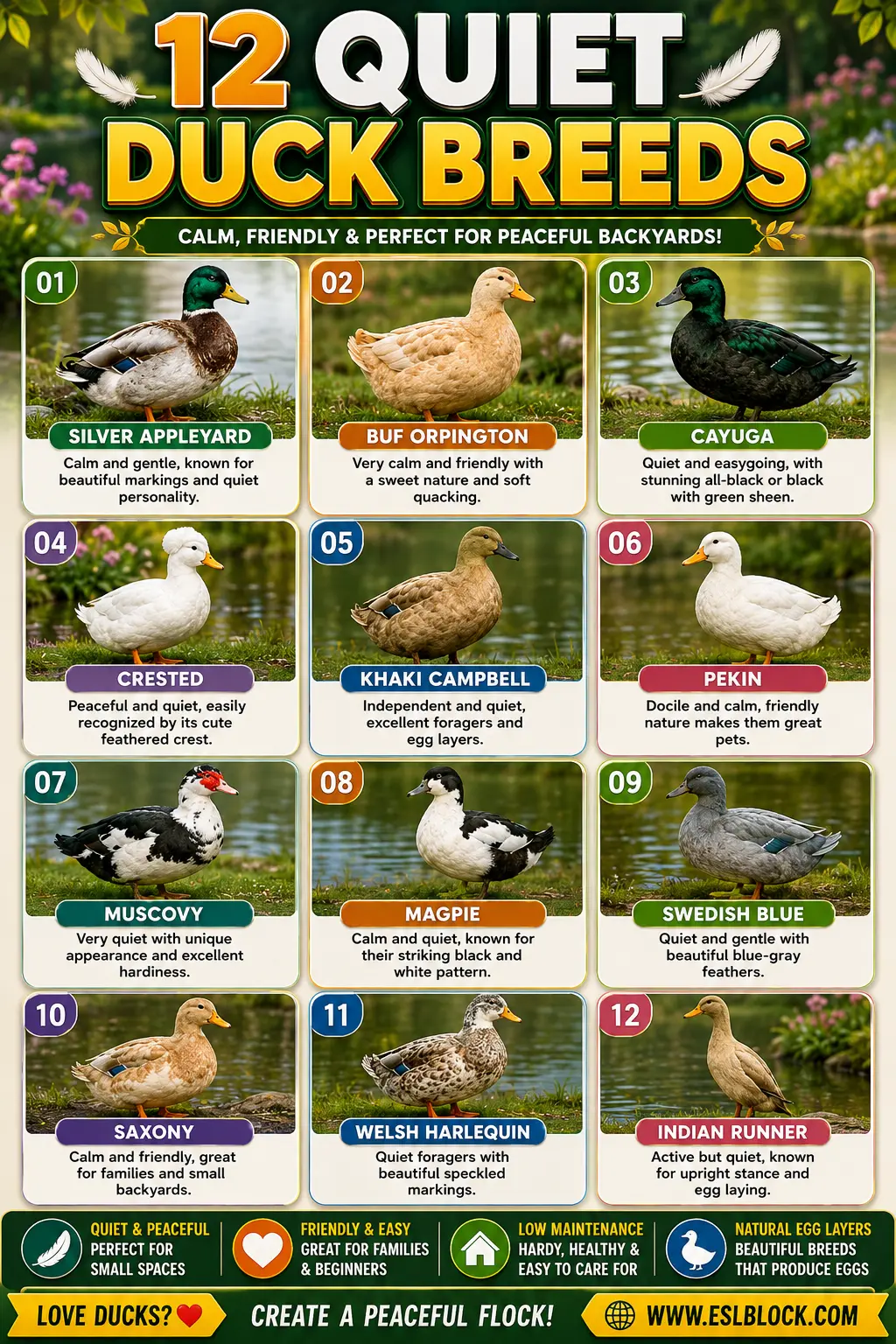
12 Quiet Duck Breeds Perfect for Peaceful Backyards
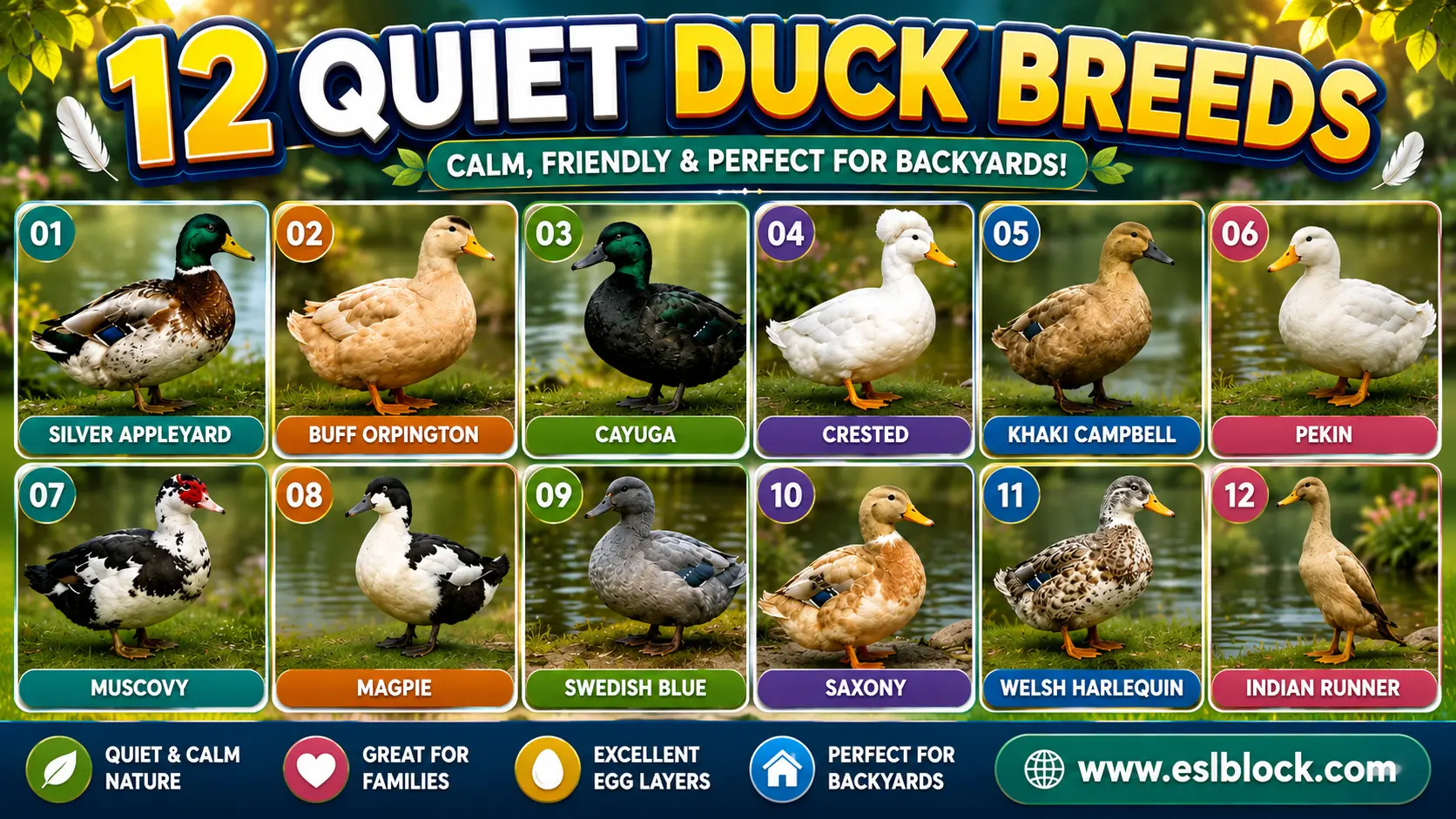
Quiet duck breeds are a great choice for families, small farms, and backyard keepers. These ducks are usually calm and make less noise than many other breeds.
Some ducks are friendly, beautiful, and excellent egg layers. Let’s discover twelve quiet duck breeds that are loved around the world.
If you enjoy learning about animals, you may also like our guide to parts of a dog.
1. Silver Appleyard
(Pronunciation: SIL-ver AP-ul-yard | Origin: Developed in England by Reginald Appleyard.)
The Silver Appleyard is a large duck with colorful feathers and a gentle nature. It enjoys ponds and grassy areas. Many duck keepers admire its dual-purpose qualities for both eggs and meat.
Calm and beautiful.
2. Buff Orpington
(Pronunciation: BUFF OR-ping-tun | Origin: First developed in England.)
Buff Orpington ducks have soft golden feathers and friendly personalities. They are known for being quiet and easy to handle.
They’re wonderful for beginners.
3. Cayuga
(Pronunciation: kai-YOO-guh | Origin: Named after Cayuga Lake in New York.)
Cayuga ducks are famous for their shiny black feathers with a green glow. Their peaceful behavior makes them excellent backyard birds. Many breeders appreciate this heritage duck breed.
Elegant and quiet.
4. Crested
(Pronunciation: KRES-tid | Origin: A very old domestic duck breed.)
Crested ducks are easy to recognize because of the fluffy feathers on top of their heads. They’re friendly and enjoy living with other ducks.
That little crest makes them unforgettable.
5. Khaki Campbell
(Pronunciation: KAH-kee KAM-bul | Origin: Developed in England during the late 1800s.)
Khaki Campbell ducks are excellent egg layers. They stay active during the day but are usually calm around people. Farmers value their high egg production.
Small bird. Big producer.
6. Pekin
(Pronunciation: PEE-kin | Origin: Originally from China.)
Pekin ducks have white feathers and bright orange bills. They’re one of the most popular domestic ducks because of their gentle personalities.
Friendly favorites.
7. Muscovy
(Pronunciation: MUS-kuh-vee | Origin: Native to Central and South America.)
Muscovy ducks are different from most ducks because they make soft hissing sounds instead of loud quacks. Their unique quiet behavior makes them ideal for peaceful homes.
Very quiet indeed.
8. Magpie
(Pronunciation: MAG-pie | Origin: Named after the black-and-white magpie bird.)
Magpie ducks have striking black-and-white feathers. They enjoy searching for insects and plants around ponds and gardens.
Busy but peaceful.
9. Swedish Blue
(Pronunciation: SWEE-dish BLOO | Origin: Developed in Sweden.)
Swedish Blue ducks have lovely blue-gray feathers. They’re calm birds that adapt well to different climates. This beautiful rare duck breed is also easy to recognize.
Graceful and gentle.
If you’re curious about the human body too, explore our article on human body organs.
10. Saxony
(Pronunciation: SAK-suh-nee | Origin: Developed in Germany.)
Saxony ducks are large, friendly birds with soft brown and cream feathers. They enjoy quiet farm life and make wonderful family pets.
Calm companions.
11. Welsh Harlequin
(Pronunciation: WELSH HAR-luh-kwin | Origin: Developed in Wales.)
Welsh Harlequin ducks have beautiful speckled feathers and excellent egg-laying ability. They are gentle and easy to care for. Many poultry keepers recommend this productive laying breed.
Pretty and practical.
12. Indian Runner
(Pronunciation: IN-dee-un RUN-er | Origin: Originated in Indonesia.)
Indian Runner ducks stand almost straight while walking. Instead of waddling, they move quickly across fields looking for insects. Their unusual upright posture makes them easy to spot.
They always stand out.
Quiet ducks bring beauty, fresh eggs, and peaceful moments to any backyard. Every breed has its own personality and charm. Sometimes the quietest birds leave the biggest impression.