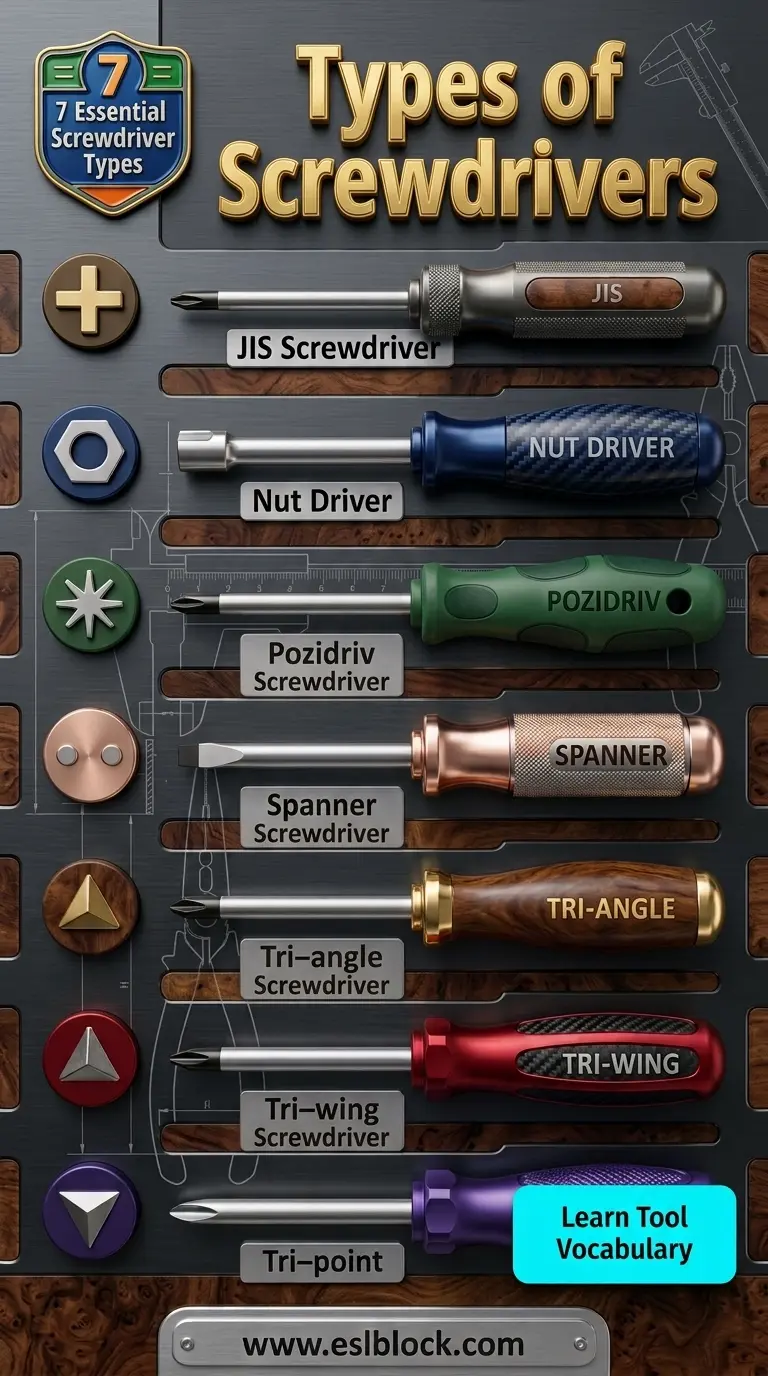
Types of Screwdrivers: 7 Essential Screwdriver Names You Should Know
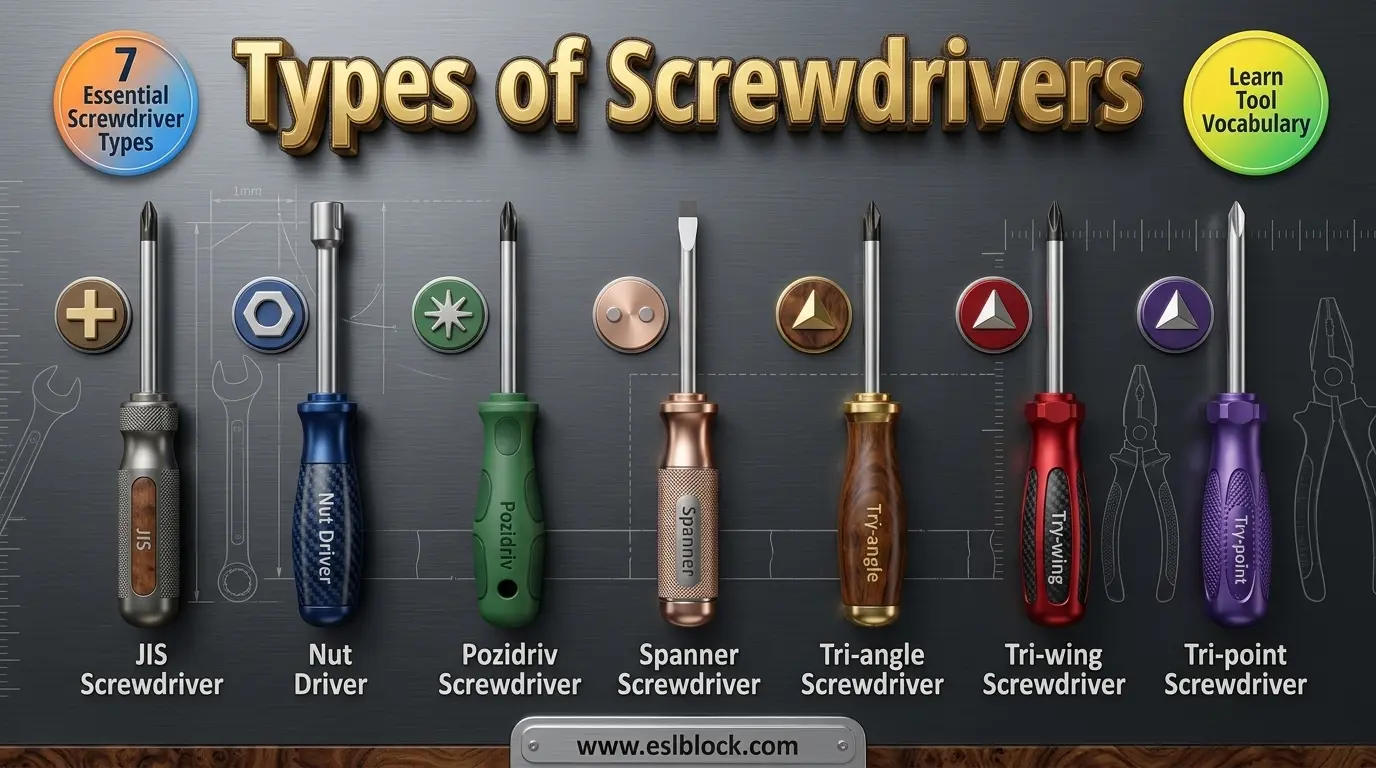
The screw refused to move.
You pushed harder. Still nothing. Then someone handed you a different screwdriver. One quick turn. Done.
That’s the secret. Every screw has a matching tool. Learning Types of Screwdrivers helps you choose the right one and avoid damaging screws or tools. Once you know their names, every toolbox starts to make sense.
1. JIS Screwdriver
(Pronunciation: Jay-Eye-Ess | Origin: JIS stands for Japanese Industrial Standards, introduced for Japanese-made products.)
At first glance, a JIS screwdriver looks almost like a Phillips screwdriver. But don’t be fooled. They are not exactly the same.
JIS screwdrivers fit Japanese screws found in motorcycles, cameras, and many electronic devices. They grip the screw more securely, reducing slipping. The Japanese Industrial Standards helped make these tools famous around the world.
A tiny difference can save a screw.
2. Driver (Nut Driver)
(Pronunciation: DRY-ver | Origin: Nut drivers became popular with the growth of mechanical assembly in the early 1900s.)
Picture this. Instead of turning a screw, you’re tightening a small hex-shaped nut. A regular screwdriver won’t help much.
A nut driver has a hollow socket that fits over hex nuts and bolts. Electricians, mechanics, and furniture builders use it every day. Modern hand tool designs include many sizes for different jobs.
The right fit makes work easy.
3. Pozidriv Screwdriver
(Pronunciation: POZ-ee-drive | Origin: Pozidriv was developed in Europe during the 1960s as an improvement over Phillips screws.)
Here’s the cool part. It has extra grooves that help it grip better than many other screwdrivers.
Pozidriv screwdrivers are common in furniture, woodworking, and construction. They reduce slipping and allow more turning force. The Pozidriv screw system is especially popular across Europe.
More grip. Less frustration.
4. Spanner Screwdriver
(Pronunciation: SPAN-er | Origin: Also called Snake Eye, this security drive was created to discourage tampering.)
Ever seen a screw with two tiny holes instead of a slot? It looks unusual for a reason.
A Spanner screwdriver fits special security screws often found in elevators, public buildings, and electrical equipment. These screws help prevent unwanted removal. Many tamper-resistant screw designs are made for safety rather than convenience.
Some screws are meant to stay put.
5. Tri-angle Screwdriver
(Pronunciation: TRY-ang-guhl | Origin: The Tri-angle drive was created as a tamper-resistant screw system for electrical and safety equipment.)
Three sides. One purpose. A Tri-angle screw is designed to keep curious hands away from important parts.
Tri-angle screwdrivers are often used in household appliances, electrical panels, toys, and public equipment. Their unusual shape makes them harder to remove with common tools. The Tri-angle security drive helps protect products from accidental or unauthorized opening.
Not every screw wants to be opened.
6. Tri-wing Screwdriver
(Pronunciation: TRY-wing | Origin: The Tri-wing screw drive was developed for the aerospace industry before becoming popular in electronics.)
Have you ever tried opening a game console or smartphone and found a strange three-wing screw? That’s no accident.
Tri-wing screwdrivers fit three-slot screws used in gaming devices, laptops, drones, and aviation equipment. Manufacturers use them to reduce accidental repairs and improve safety. The Tri-wing screw drive has become common in many modern electronic devices.
Three wings. One smart design.
7. Tri-point Screwdriver
(Pronunciation: TRY-point | Origin: Tri-point screws became popular in portable electronics and mobile devices.)
At first, it looks like a Phillips screwdriver. Look again. The tip has only three points instead of four.
Tri-point screwdrivers are commonly used in smartphones, tablets, laptops, and other small electronic devices. Their unique shape helps manufacturers protect delicate components. Many security screw systems rely on Tri-point designs for added protection.
Small tool. Precision matters.
Learning tool names is just like learning new English words. Every name tells a story. If you enjoy building your vocabulary, explore Parts of the Hand Vocabulary to learn the names of the fingers that hold these tools. You can also discover Body Parts Names in English, explore Human Body Organs, or learn about the Parts of the Brain to expand your everyday English.
Final Thoughts
Every screwdriver has a job, and choosing the right one makes every repair easier. The next time you open a toolbox, you won’t just see tools—you’ll recognize their names and know exactly why they matter.