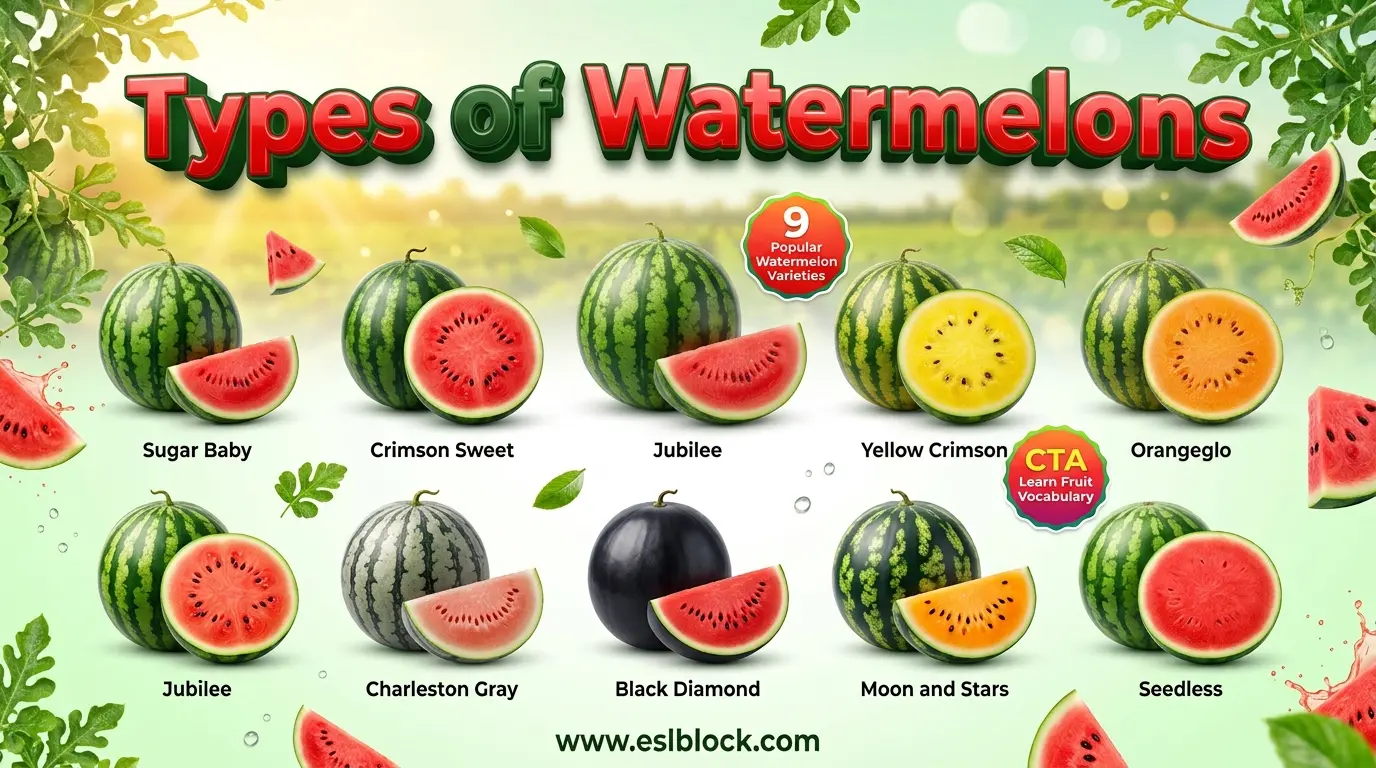
Types of Watermelons: 9 Popular Watermelon Varieties You Should Know
The knife slid through the thick green rind.
Crack.
Bright red fruit appeared like a hidden treasure. Sweet. Cold. Perfect for a hot summer day.
That’s why learning Types of Watermelons is so much fun. They may all look similar from the outside, but each variety has its own color, taste, and story. Let’s discover some of the world’s favorite watermelons.
1. Sugar Baby
(Pronunciation: SHOO-ger BAY-bee | Origin: Developed in the United States during the 1950s as a compact watermelon variety.)
Don’t let the name fool you. Sugar Baby may be small, but it’s packed with sweetness.
Its dark green rind hides deep red flesh that is crisp and juicy. Because it’s smaller than many other varieties, it’s perfect for family meals. The United States Department of Agriculture recognizes watermelon as one of America’s favorite summer fruits.
Small fruit. Big flavor.
2. Crimson Sweet
(Pronunciation: KRIM-zun Sweet | Origin: Bred in the United States in the 1960s for disease resistance and sweetness.)
Picture this. A picnic table. Ice-cold watermelon slices. Chances are, they came from a Crimson Sweet.
This variety has bright red flesh, light green stripes, and a wonderfully sweet taste. It grows well in many climates and is popular with home gardeners. Modern watermelon breeding programs helped make Crimson Sweet one of the world’s favorite varieties.
Summer in every bite.
3. Yellow Crimson
(Pronunciation: YEL-oh KRIM-zun | Origin: A yellow-fleshed variation of the Crimson Sweet family.)
Here’s the surprise. You cut it open expecting red. Instead, bright yellow fruit smiles back at you.
Yellow Crimson has sweet, juicy flesh with a mild honey-like flavor. Its green striped rind looks almost identical to red varieties. Research into watermelon genetics explains why some watermelons naturally produce yellow flesh.
Nature loves surprises.
4. Orangeglo
(Pronunciation: OR-inj-gloh | Origin: Developed in the United States for its bright orange flesh.)
Orange inside? Yes, really. It catches everyone’s attention before the first bite.
Orangeglo watermelons are large, very sweet, and have crisp orange flesh. They thrive in warm weather and often grow bigger than many common varieties. The colorful flesh comes from natural plant pigments found in fruit.
Color makes it unforgettable.
5. Jubilee
(Pronunciation: JOO-bih-lee | Origin: Introduced in Florida during the 1960s for commercial farming.)
Some watermelons are made for backyards. Jubilee was made for big harvests.
This long, striped watermelon produces juicy red flesh and can grow quite large. Farmers appreciate its good storage life and dependable harvests. Many commercial growers rely on watermelon production research to improve fruit quality each season.
A giant that’s worth sharing.
6. Charleston Gray
(Pronunciation: CHARL-stun Gray | Origin: Developed in South Carolina, USA, during the 1950s for better disease resistance and transport.)
At first glance, it doesn’t even look like a watermelon. Its smooth, pale green skin almost hides what’s inside.
Charleston Gray has crisp red flesh, a sweet flavor, and very few cracks during shipping. Its thick rind helps protect the fruit on long journeys. The United States Department of Agriculture recognizes it as an important variety for commercial growers.
Strong on the outside. Sweet on the inside.
7. Black Diamond
(Pronunciation: Black DYE-uh-mund | Origin: Introduced in the United States as a large heirloom watermelon.)
Its rind is so dark green that it almost looks black. That’s where the name comes from.
Black Diamond watermelons are large, round, and filled with juicy deep-red flesh. Their sweet flavor has made them a favorite at summer picnics for generations. Many heirloom watermelon varieties are still grown because of their outstanding taste.
Some classics never fade.
8. Moon and Stars
(Pronunciation: Moon and Stars | Origin: Named for its yellow spots that resemble a moon and stars in the night sky.)
Picture this for a second. A watermelon covered with tiny yellow dots. It almost looks painted by hand.
Moon and Stars watermelons have sweet red flesh and a unique dark green rind decorated with bright yellow spots. This heirloom variety has been grown since the early 1900s and remains popular with home gardeners. The fascinating heirloom fruit varieties remind us how diverse nature can be.
Nature is the best artist.
9. Seedless
(Pronunciation: SEED-lis | Origin: Seedless watermelons were first developed through careful plant breeding in the twentieth century.)
No spitting seeds. No interruptions. Just sweet bites from start to finish.
Seedless watermelons have tiny soft white seed coats instead of hard black seeds. They’re grown using special breeding methods and are now among the most popular watermelons sold in supermarkets. Modern watermelon breeding has made seedless varieties sweeter and easier to grow than ever before.
Simple. Sweet. Convenient.
If you enjoy learning fruit vocabulary, explore Types of Tomato and Chili Pepper Types. You can also build your everyday English with Parts of the Mouth Vocabulary and Body Parts Names in English.
Final Thoughts
Every watermelon has its own color, flavor, and story waiting to be discovered. The next time you slice one open, you might find a new favorite hidden beneath the rind. 🍉