Essential Kitchen Verbs Vocabulary for Daily Cooking
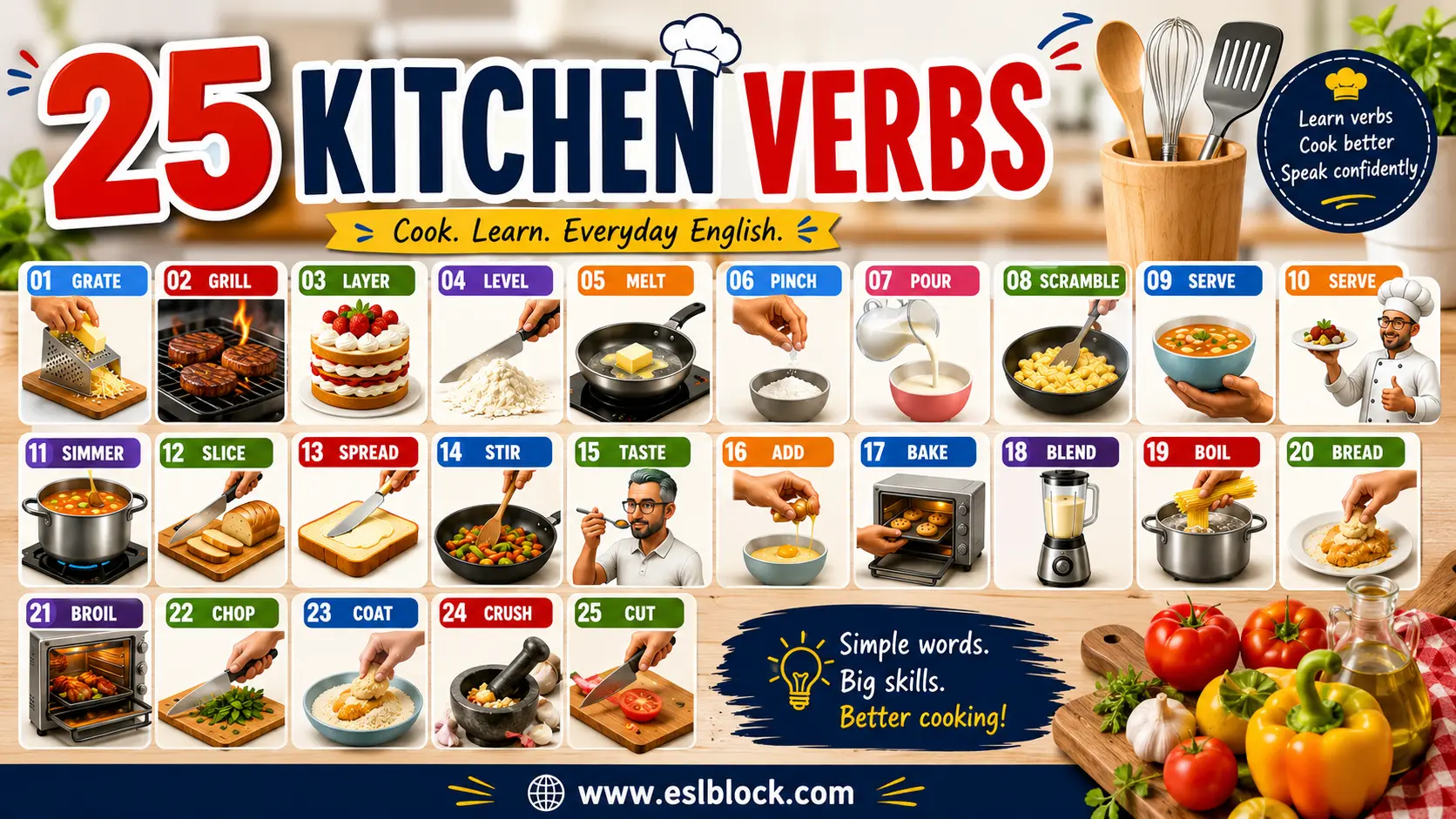
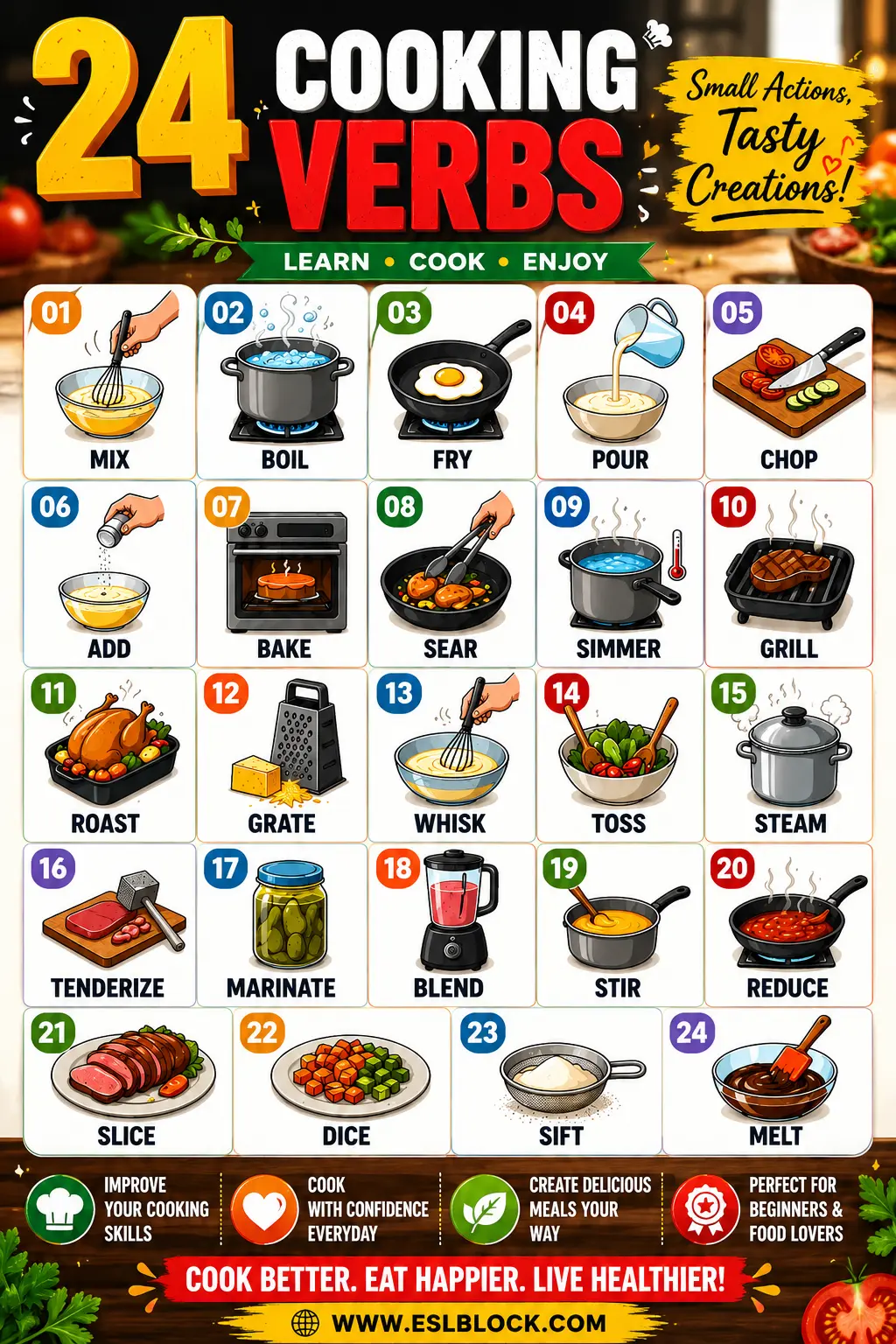
Kitchen verbs are action words we use while preparing food. They help us understand recipes and talk about cooking with confidence.
Every meal uses many different actions. Learning these verbs makes cooking easier and improves your English at the same time.
If you enjoy learning food vocabulary, you may also like our guide to Types of Tomato.
1. Grate
(Pronunciation: GRAYT | Origin: From Latin, meaning “to scrape.”)
Grate means to rub food against a rough surface to make small pieces. Cheese, carrots, and chocolate are often grated before cooking. Learning proper grating techniques helps create even pieces that melt and cook better.
Small pieces can make a big difference.
2. Grill
(Pronunciation: GRIL | Origin: From French, meaning “gridiron.”)
Grill means to cook food over direct heat. Meat, vegetables, and seafood develop a smoky flavor and crispy outside while staying juicy inside. Many people enjoy outdoor grilling methods during family gatherings.
Fire adds amazing flavor.
3. Layer
(Pronunciation: LAY-er | Origin: From Old English.)
Layer means to place one ingredient over another. Cakes, lasagna, and sandwiches all use layers to build flavor and texture.
Every layer tells part of the story.
4. Level
(Pronunciation: LEV-ul | Origin: From Old French.)
Level means to make the top of an ingredient flat before measuring or baking. Bakers often level flour with a knife to keep recipes accurate.
Little details matter.
5. Melt
(Pronunciation: MELT | Origin: From Old English.)
Melt means to turn a solid into a liquid by heating it. Butter, cheese, and chocolate melt quickly when warmed. Many baking recipes begin by melting butter before mixing the other ingredients.
Smooth and creamy.
6. Pinch
(Pronunciation: PINCH | Origin: From Middle English.)
A pinch means taking a very small amount of an ingredient between your fingers. Salt and spices are often added this way to improve flavor without using too much.
Sometimes less is more.
7. Pour
(Pronunciation: POR | Origin: From Old French, meaning “to flow.”)
Pour means to let a liquid flow from one container into another. Milk, soup, juice, and batter are poured carefully to avoid spills. Good food safety habits also include pouring ingredients into clean containers.
Slow and steady wins the recipe.
8. Scramble
(Pronunciation: SKRAM-bul | Origin: From Middle English, meaning “to mix quickly.”)
Scramble means to stir eggs while they cook so they become soft and fluffy. It’s one of the easiest ways to prepare eggs for breakfast. Learning how to cook eggs safely helps make every meal safer.
Soft, warm, and tasty.
9. Serve
(Pronunciation: SURV | Origin: From Old French, meaning “to present or offer.”)
Serve means to place food on a plate or in a bowl for people to eat. A beautifully served meal looks more inviting and enjoyable.
Good food deserves a good presentation.
10. Simmer
(Pronunciation: SIM-er | Origin: From Middle English.)
Simmer means to cook food gently in hot liquid just below the boiling point. Soups, sauces, and stews often simmer for a long time to develop rich flavors. Many healthy cooking methods include simmering because it keeps food tender.
Patience creates great flavor.
11. Slice
(Pronunciation: SLYS | Origin: From Old French.)
Slice means to cut food into thin, even pieces. Bread, tomatoes, cucumbers, and meat are often sliced before serving. A sharp knife and proper knife skills make slicing easier and safer.
Thin cuts look better.
12. Spread
(Pronunciation: SPRED | Origin: From Old English.)
Spread means to cover a surface evenly with butter, jam, cream, or another soft food. Bread, toast, and cakes are often prepared this way.
Even layers make every bite better.
13. Stir
(Pronunciation: STUR | Origin: From Old English.)
Stir means to move ingredients around with a spoon or spatula while cooking. Stirring helps heat spread evenly and prevents food from sticking to the pan. Many soup recipes recommend stirring often for the best texture.
Keep it moving.
14. Taste
(Pronunciation: TAYST | Origin: From Old French, meaning “to test or try.”)
Taste means to try a small amount of food to check its flavor. Cooks often taste dishes before serving to see if they need more salt, herbs, or spices. Developing your sense of taste helps you become a better cook.
Trust your taste buds.
15. Add
(Pronunciation: AD | Origin: From Latin, meaning “to put to.”)
Add means to put one ingredient into another while cooking. Recipes often tell you when to add sugar, spices, vegetables, or herbs. Following the correct recipe instructions helps every dish turn out better.
Every ingredient has its moment.
16. Bake
(Pronunciation: BAYK | Origin: From Old English.)
Bake means to cook food with dry heat inside an oven. Bread, cakes, cookies, and pies are baked until they become golden and delicious. Good baking basics help beginners achieve better results.
The oven works its magic.
17. Blend
(Pronunciation: BLEND | Origin: From Old English, meaning “to mix together.”)
Blend means to mix ingredients until they become smooth. Smoothies, soups, and sauces are often blended using a blender. Proper blending techniques create creamy and even textures.
Smooth is satisfying.
18. Boil
(Pronunciation: BOYL | Origin: From Latin, meaning “to bubble.”)
Boil means to heat a liquid until it bubbles rapidly. Pasta, rice, eggs, and vegetables are often cooked this way. Knowing the correct safe cooking temperatures helps prepare food safely.
Hot and bubbling.
19. Bread
(Pronunciation: BRED | Origin: From the word “bread,” referring to coating food with crumbs.)
To bread means to cover food with breadcrumbs before cooking. Chicken, fish, and vegetables are often breaded before frying or baking. This popular breadcrumb coating creates a crispy outside.
Crunch in every bite.
20. Broil
(Pronunciation: BROYL | Origin: From Old French, meaning “to cook over direct heat.”)
Broil means to cook food using strong heat from above in an oven. Meat, fish, and cheese brown quickly under the broiler. Many oven cooking tips explain when broiling is the best choice.
Quick heat. Great flavor.
21. Chop
(Pronunciation: CHOP | Origin: From Middle English, meaning “to cut.”)
Chop means to cut food into medium-sized pieces with a knife. Onions, carrots, peppers, and herbs are commonly chopped before cooking. Learning proper knife safety helps prevent accidents in the kitchen.
A good chop saves time.
22. Coat
(Pronunciation: KOHT | Origin: From Old French, meaning “to cover.”)
Coat means to cover food with a thin layer of another ingredient. Chicken may be coated with flour, while vegetables can be coated with oil before roasting. Many breading techniques begin by coating food evenly.
A good coating adds flavor.
23. Crush
(Pronunciation: KRUSH | Origin: From Old French, meaning “to break into small pieces.”)
Crush means to press food until it breaks into tiny pieces. Garlic, peppercorns, and crackers are often crushed before cooking. Fresh garlic preparation brings out stronger flavor in many recipes.
Press, then enjoy.
24. Cut
(Pronunciation: KUT | Origin: From Old English.)
Cut means to divide food into smaller pieces using a knife or kitchen tool. Almost every recipe begins with cutting fruits, vegetables, or meat. Good knife skills make cooking faster and safer.
Every great meal starts with a cut.
25. Dice
(Pronunciation: DYS | Origin: Named after cube-shaped dice.)
Dice means to cut food into small, even cubes. Onions, potatoes, carrots, and tomatoes are often diced so they cook evenly. Proper vegetable preparation helps dishes look neat and cook at the same speed.
Small cubes. Big difference.
26. Drain
(Pronunciation: DRAYN | Origin: From Old English, meaning “to let liquid flow away.”)
Drain means to remove extra liquid from cooked food. Pasta, vegetables, and canned beans are usually drained before the next cooking step.
Leave the water behind.
27. Dry
(Pronunciation: DRY | Origin: From Old English.)
Dry means to remove moisture from food using a towel or by letting it air dry. Dry vegetables brown better, and dry meat cooks more evenly. Proper food preparation also helps improve kitchen safety.
Dry food cooks better.
28. Fold
(Pronunciation: FOHLD | Origin: From Old English, meaning “to bend over.”)
Fold means to gently combine light ingredients without removing the air inside. Bakers fold whipped cream or beaten egg whites into batter to keep cakes soft and fluffy.
Gentle hands make light desserts.
29. Knead
(Pronunciation: NEED | Origin: From Old English.)
Knead means to press and stretch dough with your hands until it becomes smooth and elastic. Bread, pizza, and rolls all depend on proper kneading. Learning bread-making techniques helps create soft, delicious loaves.
Strong hands make great bread.
If you enjoy building everyday English vocabulary, you might also like our guide to Parts of the Face or learn more with our article on Names of Teeth.
Final Thoughts
Kitchen verbs make recipes easier to read and everyday conversations more natural. The more you practice these action words, the more confident you’ll become in both cooking and English. Every delicious meal begins with a simple action word.