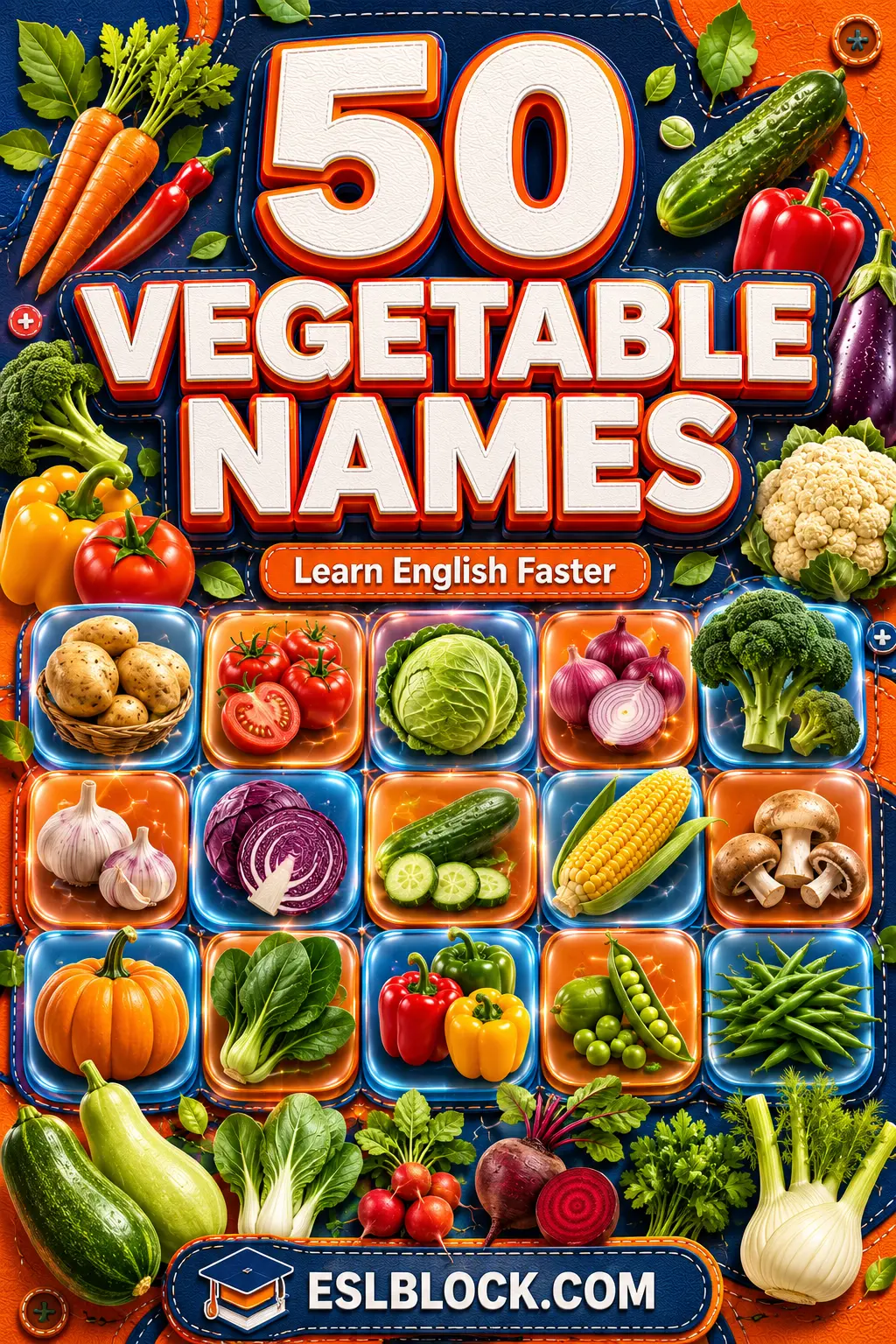
50 Vegetables Vocabulary Words You Need to Know Today
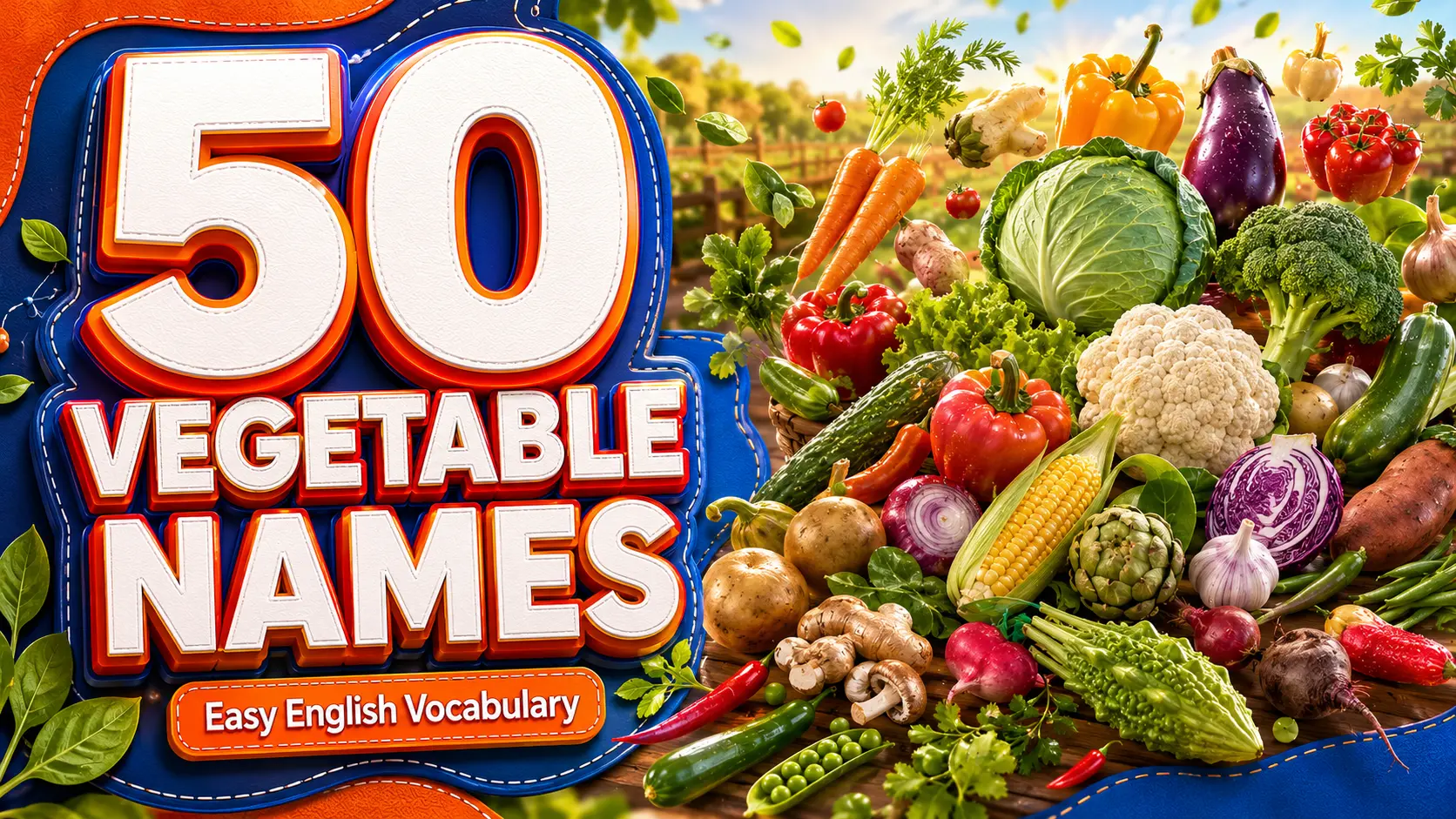
A shadow zipped across the garden path. Dirt flew into the chilly air.
Something secret moved underground. Deep inside dark soil, incredible foods grow hidden every single day.
Learning 50 vegetables vocabulary helps you describe tasty meals and green gardens. When you practice using parts of speech in class, these words make your sentences pop. Let’s explore 50 green wonders!
50 Vegetables Vocabulary Words
- Potato: Brown skin hides soft white flesh under cool dirt. Farmers dig these oval tubers up each fall. Tasty fries start right here.
- Onion: Papery skin wraps tightly around a strong, round bulb. Cutting it brings quick tears to your eyes. Flavor blooms in hot pans.
- Tomato: Bright red juice sprays when a sharp knife slices through. This glossy red fruit loves sunny backyard gardens. Pizza sauce needs it always.
- Carrot: Crunchy orange cones hide long bodies deep in cool ground. Rabbits chew the sweet roots happily. Crisp bites taste so fresh.
- Cabbage: Tightly packed green leaves form one heavy, round head. Farmers pick them during crisp autumn mornings. Simple slaw uses this daily.
- Cauliflower: Thick green leaves wrap around a bumpy white head. Cooks steam the soft florets for dinner. White trees look neat.
- Broccoli: Tiny dark green buds form dense clusters on sturdy stems. This mini green tree packs powerful dietary fiber for health. Kids eat green trees easily.
- Spinach: Flat green leaves feel soft and thin in your hand. Heat wilts the tender green leaves quickly. Iron fills every bite.
- Lettuce: Crisp green leaves stack loosely inside round garden heads. Salads need these watery leaves for crunch. Lunch stays light today.
- Cucumber: Bumpy green skin covers dark seeds inside cool flesh. Slicing it reveals a refreshing watery center. Hot days feel cooler.
- Eggplant (Brinjal): Deep purple skin shines brightly under bright store lights. The spongy inside absorbs rich savory spices. Purple food looks cool.
- Okra (Lady Finger): Five long ridges run along this slender green pod. Small white seeds line the slippery inside. Soups thicken up fast.
- Pumpkin: Hard orange rinds protect sweet yellow flesh inside giant globes. Autumn porch steps showcase these carved faces. Big pies smell delicious.
- Radish: Peppery red globes hide pure white centers underground. Sharp spicy notes surprise your tongue instantly. Spicy roots crunch loud.
- Turnip: Purple tops fade into smooth white bottoms underground. Ancient farmers cooked these round winter roots. Mashing them works best.
- Beetroot: Deep red juice stains your hands a bright pink color. Sweet earthy roots grow well in cool seasons. Colors burst on plates.
- Sweet Potato: Rough copper skin protects bright orange flesh under soil. Baking turns the thick root soft and sweet. Yams taste super sweet.
- Corn: Tall green stalks hold golden kernels inside leafy husks. Summer barbecues feature these sweet yellow cobs. Butter melts on top.
- Green Peas: Small round spheres sit safely inside soft green pods. Popping them open releases tiny sweet jewels. Green dots roll around.
- Green Beans: Long slender pods snap cleanly between two fingers. Garden vines hold these crisp green strings. Simple side dishes shine.
- Bell Pepper: Hollow red or yellow globes hold tiny white seeds. Sweet crunch fills every single bite. Colorful slices look great.
- Chili Pepper: Small red pods pack intense fiery heat inside. Eating a tiny piece burns your tongue fast. Spicy food kicks hard.
- Garlic: White papery skins cover small pungent cloves tightly. Crushing one releases strong savory aromas instantly. Flavor starts with one.
- Ginger: Knobby brown roots hide spicy yellow flesh inside. Herbal teas use this warm root for folk medicine remedies. Cold days feel warmer.
- Celery: Long green stalks crunch loudly with every single bite. Stringy green ribs hold refreshing water inside. Peanut butter fits perfectly.
- Asparagus: Spear-like green shoots rise straight out of damp spring soil. Grilling these thin stalks makes them tender. Green spears taste fantastic.
- Artichoke: Pointy green leaves form a tight spiky globe. Diners peel outer petals to reach soft hearts. Unique shapes look cool.
- Zucchini: Smooth green squash grow rapidly under broad prickly leaves. Slicing reveals soft white flesh with seeds. Summer gardens produce tons.
- Bitter Gourd: Bumpy green skin covers a sharp bitter taste inside. Traditional cooks use this fruit for natural remedies. Health benefits stay strong.
- Bottle Gourd: Smooth pale green skins form smooth bottle shapes. Mild watery flesh cooks softly in curries. Light meals feel good.
- Ridge Gourd: Sharp raised edges run down this long green fruit. Peeling the tough skin reveals soft white flesh. Simple stews taste great.
- Snake Gourd: Long wavy fruits hang down like green garden snakes. White stripes decorate the slender green body. Unique shapes trick eyes.
- Sponge Gourd: Smooth green skin hides fibrous netting inside mature fruits. Drying the inside creates natural bath sponges. Wash up with plants.
- Pointed Gourd: Tapered green ends mark this small tropical fruit. Slicing reveals tiny soft seeds inside. Curry dishes use these.
- Drumstick (Moringa Pods): Long wooden pods hang from slender tropical trees. Diners scrape soft seeds out with teeth. Tree pods pack nutrition.
- Mushroom: Soft tan caps grow quickly on dark damp forest floors. Studying cool words that start with f helps describe fungi. Earthy notes taste rich.
- Leek: Flat green leaves merge into one thick white stem. Mild onion flavors warm up winter soups. Large stalks look bold.
- Spring Onion: Slender green tops grow above tiny white bulbs. Chopping them adds fresh color to rice. Green bits pop nicely.
- Brussels Sprouts: Mini green heads sprout directly along tall woody stalks. Roasting turns the tiny leaves crispy. Miniature cabbages taste sweet.
- Kale: Frilly dark green leaves feel tough and bumpy. Healthy smoothies use these sturdy green leaves. Super greens boost power.
- Swiss Chard: Bright red or yellow stems hold dark green leaves. Learning how adjectives work describes colorful stems. Colorful leaves look vibrant.
- Bok Choy: White bulbous bases support smooth green leaves neatly. Asian stir-fry dishes cook these stalks fast. Crisp white stalks crunch.
- Arugula: Peppery green leaves feature deeply lobed edges. Salads get a spicy kick from raw leaves. Spicy greens taste bold.
- Fennel: Feathery green fronds grow above a pale white bulb. Licorice aromas rise when you chop stems. Sweet seeds smell nice.
- Parsnip: Pale cream roots look like giant white carrots. Winter frosts make these sweet roots taste richer. Roasted roots taste sweet.
- Cassava: Rough brown bark protects thick starchy white roots. Tropical farms grow this major carbohydrate crop. Tapioca comes from roots.
- Taro Root: Hairy brown skin covers starchy purple-flecked flesh. Tropical cooks boil the thick round root. Purple starch feels dense.
- Yam: Rough dark skin covers sweet orange or white flesh. Deep soil protects these massive starchy tubers. Big roots feed families.
- Watercress: Tiny round leaves float on cool running streams. Peppery notes refresh your mouth quickly. Aquatic greens taste spicy.
- Red Cabbage: Deep purple leaves form a dense heavy head. Practicing sentence types helps explain colorful cooking. Purple leaves change color.
Final Thoughts
Every single vegetable on this list brings unique flavors and healthy fuel to your plate. Which cool green food will you try next?