Types of Mangoes: 20 Popular Mango Varieties You Should Know
The sweet smell filled the air.
One bite. That’s all it took. Juicy. Bright. Unforgettable.
That’s the magic of mangoes. But here’s the thing… not every mango tastes the same. Learning Types of Mangoes is like meeting a big family where every member has a different personality. Some are rich and creamy. Others are sweet with a little tang. Let’s meet a few of the world’s favorites.
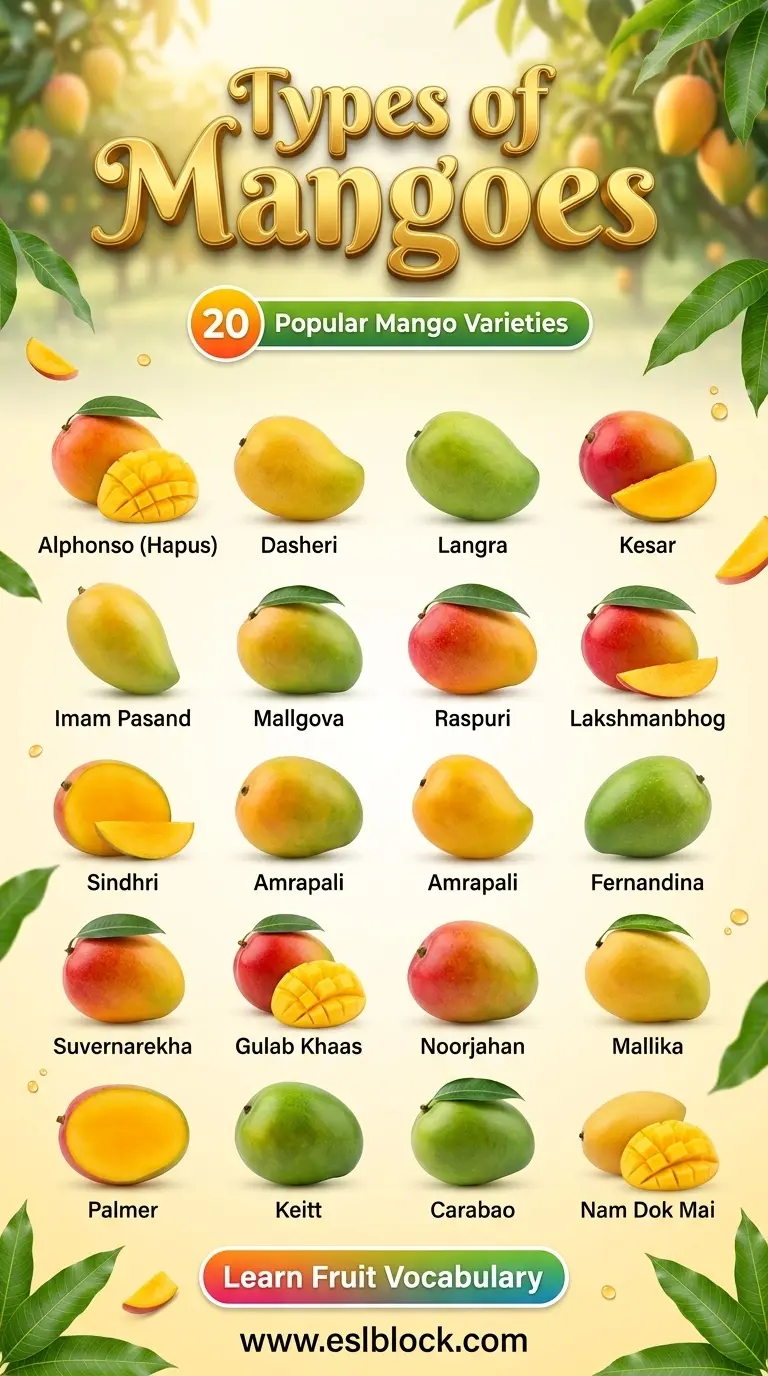
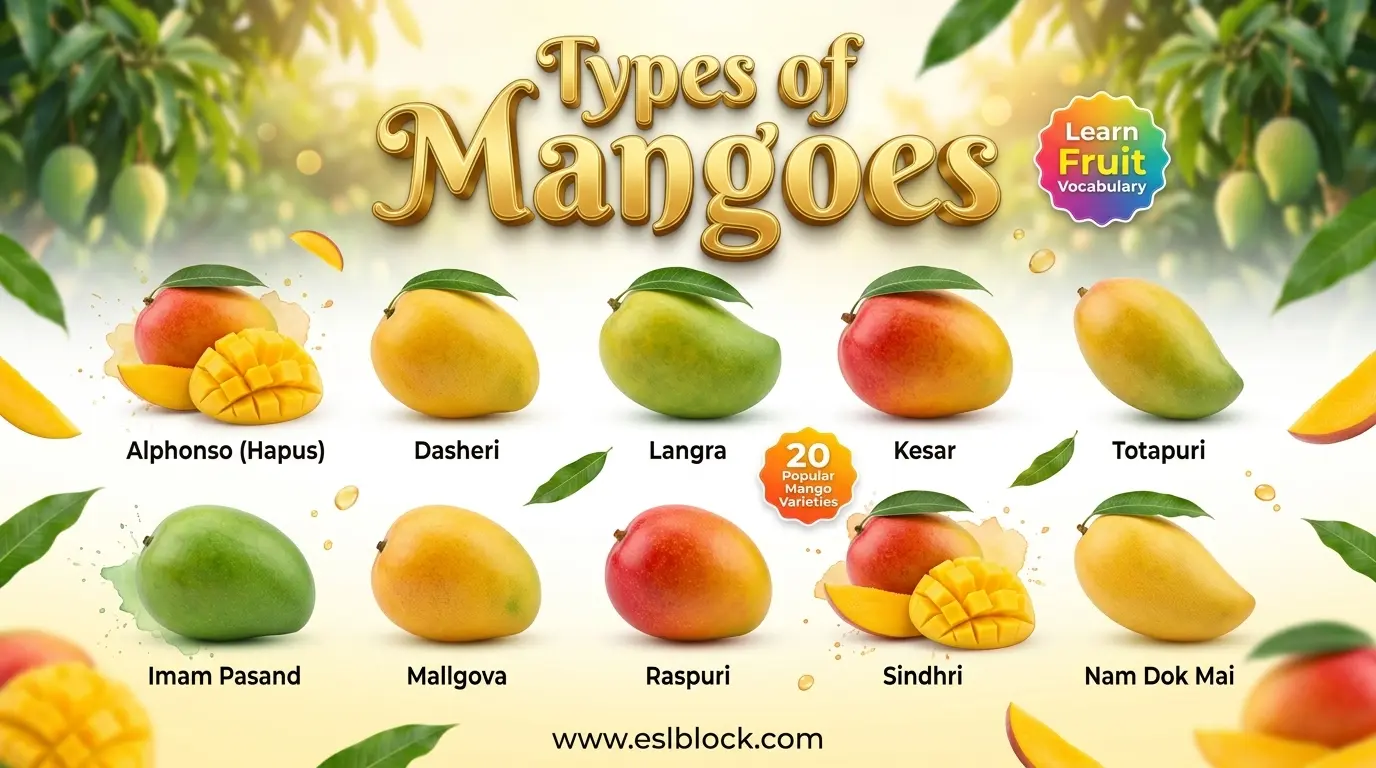
1. Alphonso (Hapus)
(Pronunciation: Al-FON-so | Origin: Named after Afonso de Albuquerque, a Portuguese governor in India.)
Many people call Alphonso the king of mangoes. One taste explains why. Its rich aroma arrives before the first bite.
This golden mango has smooth, creamy flesh and almost no fibers. It’s famous in western India and is loved around the world. The Indian mango industry has helped make Alphonso one of the world’s best-known fruits.
Royal from the first bite.
2. Dasheri
(Pronunciation: Da-SHEH-ree | Origin: Named after the village of Dasheri near Lucknow, India.)
Walk through a mango orchard in summer, and the sweet smell often leads you straight to Dasheri trees.
Dasheri mangoes are long, greenish-yellow, and wonderfully sweet. They’re usually eaten fresh because of their soft, juicy flesh. The National Horticulture Board lists Dasheri among India’s most popular commercial mango varieties.
Simple. Sweet. Classic.
3. Langra
(Pronunciation: LANG-gra | Origin: The name means “lame man” in Hindi, inspired by the original tree’s owner.)
Strange name, isn’t it? But don’t let it fool you. Langra is loved by mango fans everywhere.
Its green skin often stays green even when ripe. Inside, the flesh is juicy, smooth, and slightly tangy. The unique Langra mango variety has been grown for more than a century across northern India.
Looks can be surprising.
4. Kesar
(Pronunciation: Kay-SAR | Origin: Named after the Hindi word for saffron because of its deep orange color.)
Picture a sunset. That’s the color hiding inside a ripe Kesar mango.
Kesar mangoes have bright orange flesh and a rich, sweet flavor. They are mainly grown in Gujarat and are prized for desserts, milkshakes, and ice cream. Their beautiful color comes from natural plant pigments found in ripe fruit.
Color tells a story.
5. Totapuri
(Pronunciation: Toe-ta-PUR-ee | Origin: Named after its pointed tip, which looks like a parrot’s beak.)
Here’s the wild part. Totapuri doesn’t taste as sweet as many other mangoes. That’s exactly why some people love it.
This large mango is often used for juices, pickles, and slices rather than eating fresh. Its firm flesh holds its shape well during processing. The mango processing industry uses Totapuri more than almost any other variety.
Not every mango is made for dessert.
6. Imam Pasand
(Pronunciation: Ee-MAAM Puh-SAND | Origin: The name means “liked by the Imam,” reflecting its royal reputation in southern India.)
One bite, and you’ll understand the name. Imam Pasand is famous for its rich smell and buttery texture that almost melts in your mouth.
This large mango has thin skin, very few fibers, and a wonderfully sweet taste. It’s especially popular in South India and is often considered a premium variety. The Indian Council of Agricultural Research recognizes it as one of India’s prized mango cultivars.
Luxury in every slice.
7. Mallgova
(Pronunciation: Mal-GO-va | Origin: Believed to have originated in Tamil Nadu, India, more than a century ago.)
Mallgova doesn’t try to be small. It stands out with its round shape and impressive size.
Its thick skin protects soft, juicy flesh that is rich and sweet with a mild tang. Farmers value this variety because it stores well and travels safely. The National Horticulture Board highlights Mallgova as an important commercial mango.
Big fruit. Bigger flavor.
8. Raspuri
(Pronunciation: Ras-POO-ree | Origin: Named after the Kannada word “rasa,” meaning juice.)
Have you ever tasted a mango so juicy that it drips down your hands? That’s Raspuri.
This bright yellow mango is soft, sweet, and full of juice. It’s a favorite for fresh juice, smoothies, and desserts in southern India. The Food and Agriculture Organization notes that juicy mango varieties are widely used in fruit processing.
Juice worth every drop.
9. Lakshmanbhog
(Pronunciation: LUKSH-man-bhog | Origin: A famous mango variety from West Bengal, India.)
Its bright colors catch your eye before you even taste it. Then the sweetness takes over.
Lakshmanbhog mangoes have smooth, nearly fiber-free flesh and a rich aroma. They’re often exported because of their excellent quality and shelf life. The Agricultural and Processed Food Products Export Development Authority promotes this variety in international markets.
Beauty meets sweetness.
10. Sindhri
(Pronunciation: SIN-dree | Origin: Named after Sindhri, a town in Pakistan’s Sindh province.)
Here’s something special. Sindhri is often one of the first mangoes to arrive each summer, and people eagerly wait for it.
This long, golden-yellow mango is famous for its sweet flavor, smooth texture, and very few fibers. It has become one of Pakistan’s best-known exports. The Pakistan Horticulture Development & Export Company continues to promote Sindhri around the world.
Summer truly begins with Sindhri.
If you enjoy learning food vocabulary, you might also like Types of Tomato and Chili Pepper Types. You can also explore Parts of the Mouth Vocabulary and Body Parts Names in English to build your everyday English.
Final Thoughts
Every mango has its own story, flavor, and charm. Try a new variety whenever you can—you may discover your next favorite fruit in just one bite.