Insects Vocabulary: 24 Common Bugs You Should Know
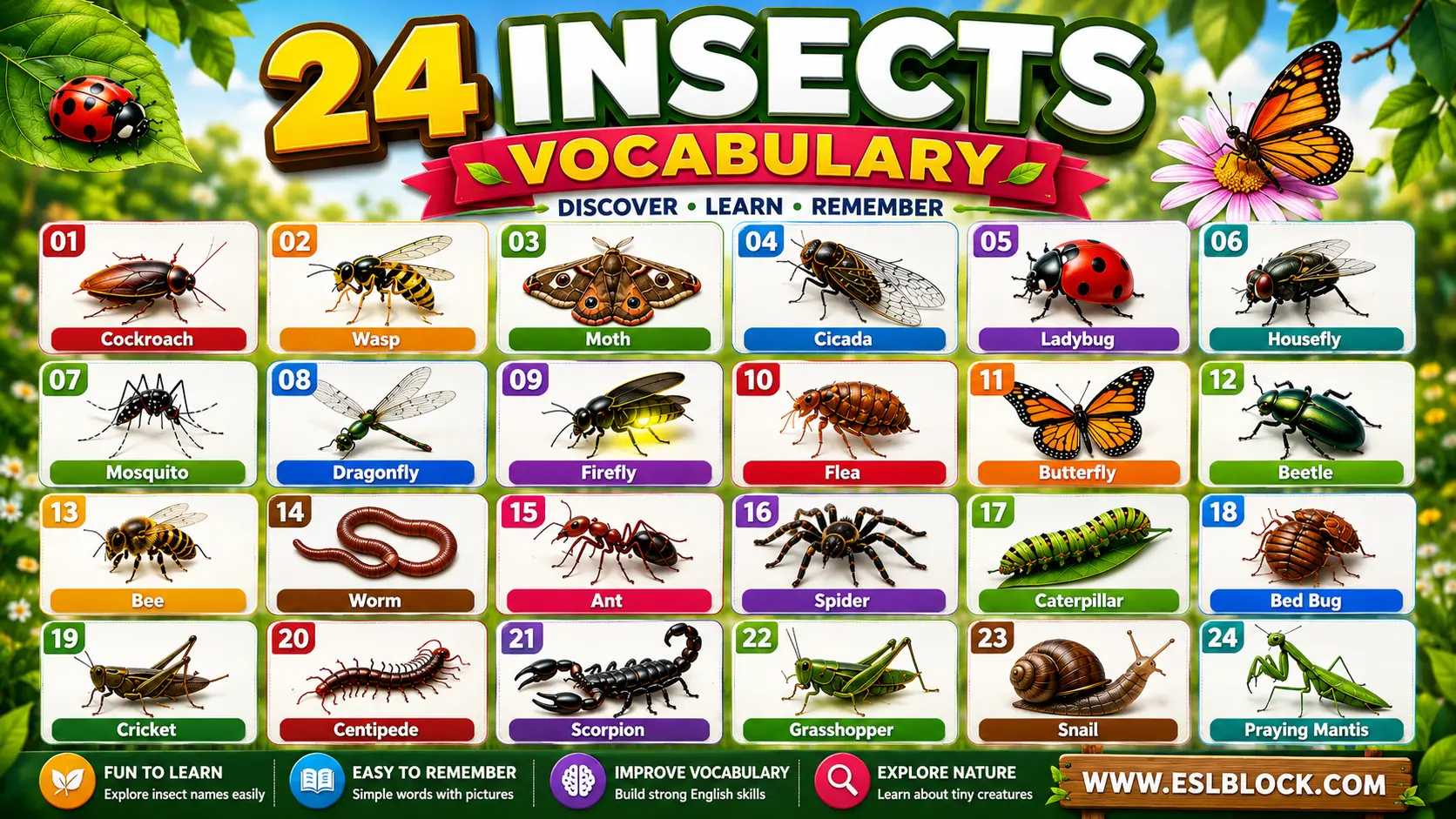
Insects vocabulary helps you talk about some of the smallest and most interesting creatures on Earth. Many insects are helpful, while a few can become pests around homes and gardens.
You can find insects almost everywhere. Let’s learn twenty-four common insect names and discover what makes each one special.
If you enjoy learning animal vocabulary, you may also like our guide to parts of a dog.
1. Cockroach
(Pronunciation: KOK-rohch | Origin: The word comes from the Spanish “cucaracha.”)
Cockroaches are among the oldest insects on Earth. They can survive in many different environments and are mostly active at night. Good pest control helps reduce cockroach problems.
Hard to surprise.
2. Wasp
(Pronunciation: WOSP | Origin: From Old English.)
Wasps have slim bodies and can sting to protect themselves. Many species help farmers by eating harmful insects. They are important pollinating insects too.
Small but useful.
3. Moth
(Pronunciation: MOTH | Origin: An old English word for flying insects.)
Most moths fly at night instead of during the day. Many are attracted to lights and play an important role in night pollination.
Night flyers.
4. Cicada
(Pronunciation: si-KAY-duh | Origin: From the Latin word “cicada.”)
Cicadas are famous for their loud summer songs. Some species spend many years underground before appearing.
Their music fills the air.
5. Ladybug
(Pronunciation: LAY-dee-bug | Origin: Named after “Our Lady” in Europe.)
Ladybugs are bright red with black spots. They eat aphids that damage plants. Gardeners love these beneficial insects.
Tiny garden helpers.
6. Housefly
(Pronunciation: HOWS-fly | Origin: Named because it often lives near homes.)
Houseflies are common around people and food. They should be kept away from kitchens because they can spread germs.
Clean homes matter.
7. Mosquito
(Pronunciation: muh-SKEE-toh | Origin: Spanish for “little fly.”)
Mosquitoes feed on blood and are active in warm weather. Some species spread diseases, so mosquito prevention is very important.
Don’t forget the repellent.
8. Dragonfly
(Pronunciation: DRAG-un-fly | Origin: The name dates back hundreds of years.)
Dragonflies have large eyes and long wings. They catch mosquitoes while flying and help keep nature balanced.
Fast and graceful.
9. Firefly
(Pronunciation: FY-er-fly | Origin: Named for its glowing light.)
Fireflies produce light from their bodies during summer evenings. This natural glow helps them find mates.
Nature’s tiny lantern.
10. Flea
(Pronunciation: FLEE | Origin: From Old English.)
Fleas are tiny insects that jump very high. They often live on dogs and cats. Good pet parasite control keeps pets healthy.
Tiny but troublesome.
11. Butterfly
(Pronunciation: BUT-er-fly | Origin: An old English name.)
Butterflies are famous for their colorful wings. They help flowers by carrying pollen from one bloom to another.
Beauty in flight.
12. Beetle
(Pronunciation: BEE-tul | Origin: From Old English.)
Beetles are the largest group of insects on Earth. They come in many shapes, sizes, and colors.
Nature’s biggest family.
13. Bee
(Pronunciation: BEE | Origin: From Old English.)
Bees are among the world’s most important pollinators. They help produce fruits and vegetables through pollination.
Small workers. Big impact.
14. Worm
(Pronunciation: WURM | Origin: From Old English.)
Earthworms are not insects, but many people confuse them with bugs. They improve soil by making tunnels underground.
Farmers love them.
15. Ant
(Pronunciation: ANT | Origin: From Old English.)
Ants live in large colonies and work together. They build amazing underground homes and carry food many times their own weight.
Teamwork wins.
16. Spider
(Pronunciation: SPY-der | Origin: From Old English.)
Spiders are not insects because they have eight legs. They catch many unwanted pests in gardens and homes.
Helpful hunters.
17. Caterpillar
(Pronunciation: KAT-er-pil-er | Origin: From Old French.)
Caterpillars are the young stage of butterflies and moths. They eat leaves before changing into adults.
A wonderful transformation.
18. Bed Bug
(Pronunciation: BED BUG | Origin: Named because it hides near beds.)
Bed bugs feed on blood while people sleep. Good bed bug control helps prevent infestations.
Better stopped early.
19. Cricket
(Pronunciation: KRIK-it | Origin: From Old French.)
Crickets make chirping sounds by rubbing their wings together. They are active mostly at night.
Nature’s musicians.
20. Centipede
(Pronunciation: SEN-ti-peed | Origin: Latin for “one hundred feet.”)
Centipedes have many legs and move quickly. Most hunt smaller insects for food.
Fast and fearless.
21. Scorpion
(Pronunciation: SKOR-pee-un | Origin: From Latin.)
Scorpions are not insects because they have eight legs. Some species have venomous stings, while many are harmless to people.
Respect their tail.
22. Grasshopper
(Pronunciation: GRASS-hop-er | Origin: Named for hopping through grass.)
Grasshoppers have strong back legs that let them jump great distances. They are common in fields and gardens.
Built to leap.
23. Snail
(Pronunciation: SNAYL | Origin: From Old English.)
Snails are not insects because they are mollusks. They move slowly and carry their shells wherever they go.
Slow but steady.
24. Praying Mantis
(Pronunciation: PRAY-ing MAN-tis | Origin: Named because its front legs look folded in prayer.)
Praying mantises are expert hunters with excellent eyesight. They wait patiently before catching prey with lightning speed.
Patience pays.
Learning insects vocabulary helps you understand nature and improve your English at the same time. Every tiny creature has an important job in our world. The more closely you look, the more amazing they become.