Types of Butterflies: 10 Colorful Species with Fun Facts
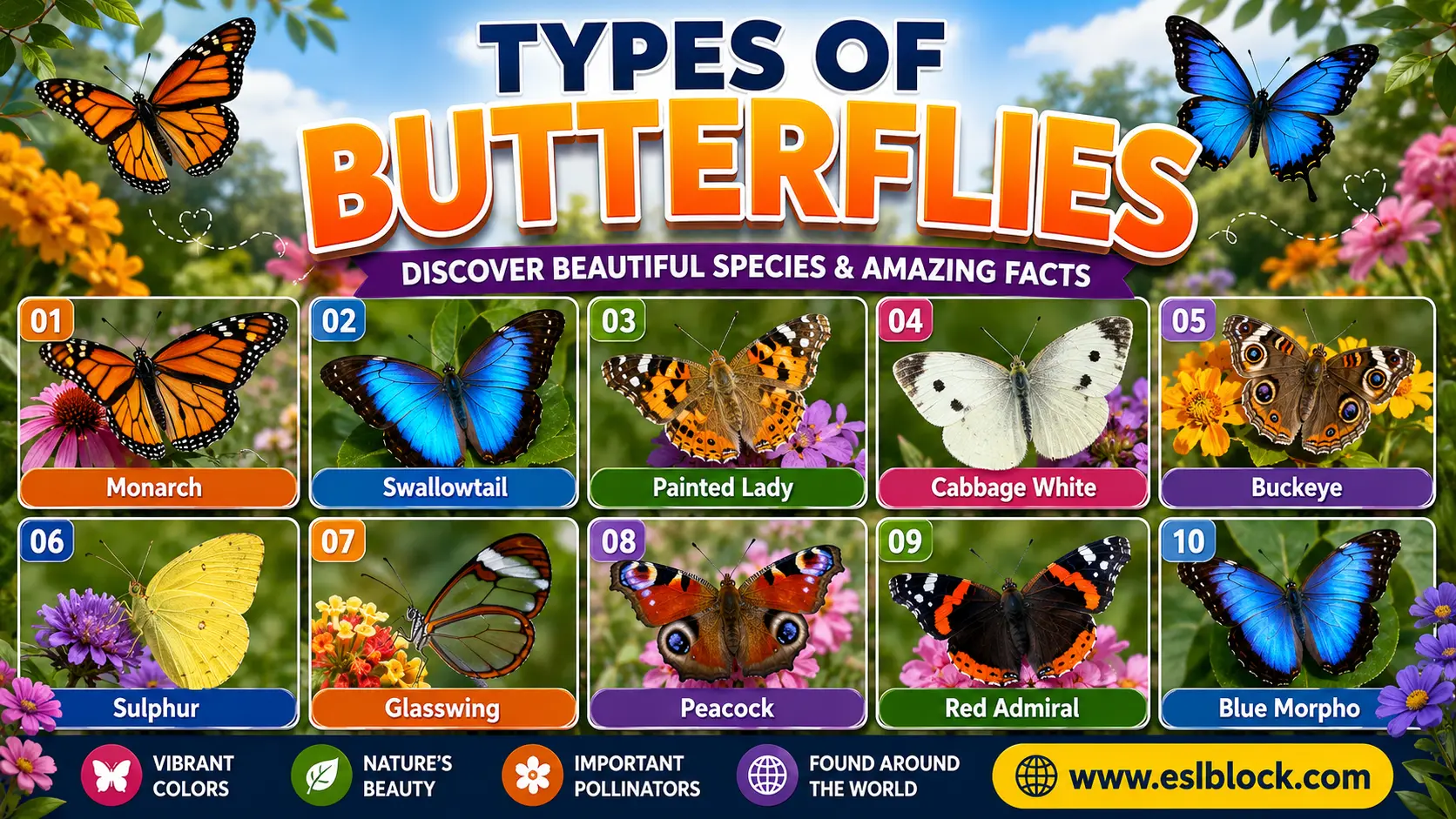
Types of butterflies are fun to learn because every species has its own colors and patterns. Some travel across countries, while others spend their whole lives in one forest.
Butterflies aren’t just beautiful. They also help flowers grow by carrying pollen from one plant to another.
If you enjoy learning about nature, you may also like exploring different types of tomatoes found around the world.
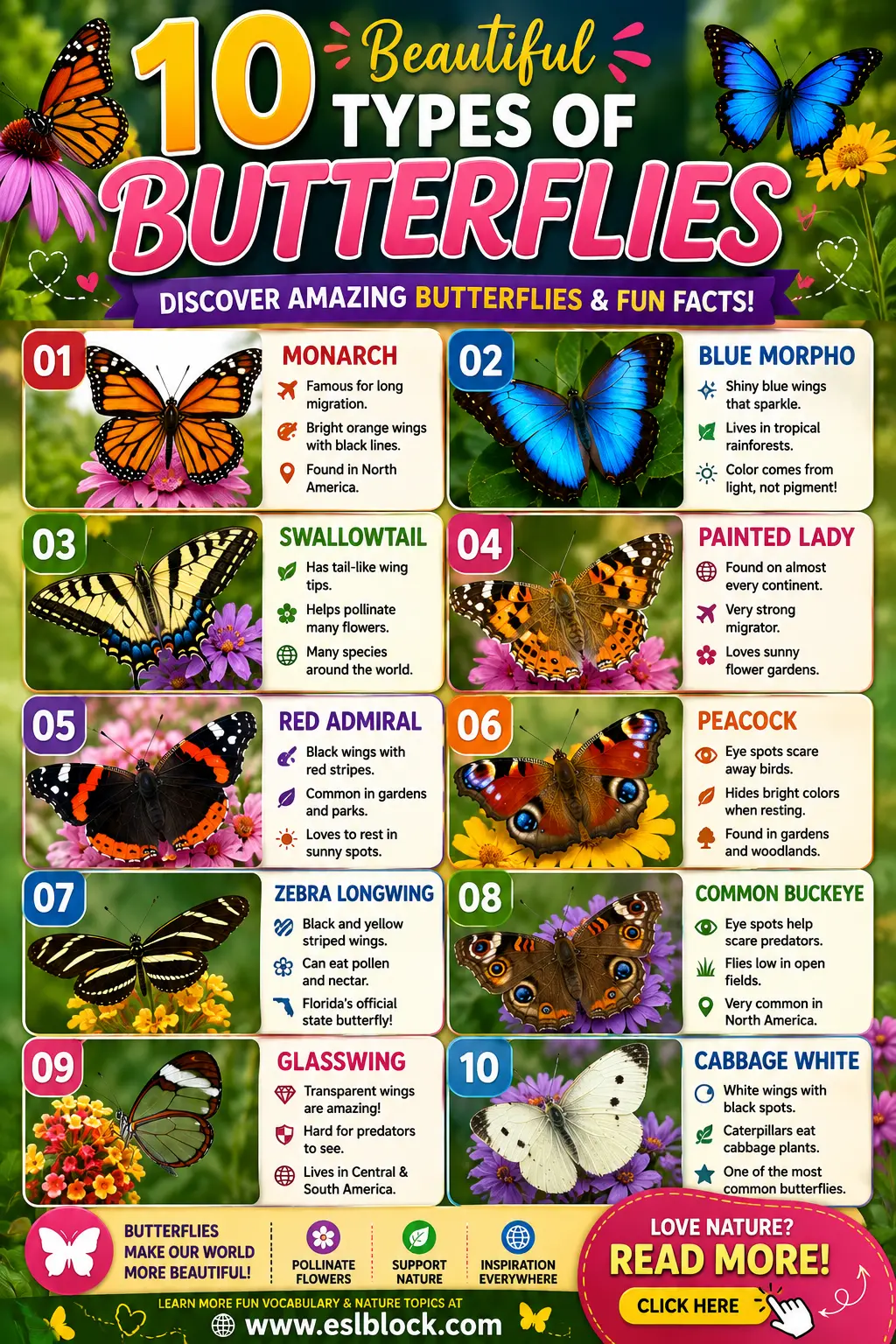
1. Monarch Butterfly
(Pronunciation: MON-ark | Origin: Named from the Greek word meaning “ruler” or “king.”)
The Monarch Butterfly is famous for its long migration. Every year, millions fly thousands of miles between Canada, the United States, and Mexico. Scientists still study this amazing butterfly migration.
Its bright orange wings warn birds that it doesn’t taste good because of chemicals from milkweed plants. Nature’s tiny traveler.
2. Blue Morpho
(Pronunciation: BLOO MOR-foh | Origin: Morpho comes from a Greek word meaning “shape.”)
The Blue Morpho shines with brilliant blue wings that sparkle in sunlight. It lives in the tropical rainforests of Central and South America.
The bright blue color comes from tiny scales that reflect light instead of blue pigment. Simply magical.
3. Swallowtail
(Pronunciation: SWOL-oh-tail | Origin: Named after the tail-like shape on its wings.)
Swallowtail butterflies have long wing tips that look like a bird’s tail. They visit many flowers and are important pollinators.
There are hundreds of Swallowtail species around the world. Beauty with a purpose.
4. Painted Lady
(Pronunciation: PAYN-tid LAY-dee | Origin: Named for its colorful wing patterns.)
The Painted Lady is one of the most widespread butterflies on Earth. You can find it on almost every continent except Antarctica. Its amazing global distribution surprises many people.
It loves sunny gardens full of flowers. A true world traveler.
5. Red Admiral
(Pronunciation: RED AD-muh-rul | Origin: The name may come from its bold red wing bands.)
The Red Admiral has black wings with bright red stripes. It enjoys resting in sunny places before flying again. This colorful garden butterfly is easy to recognize.
It often returns to the same resting spot. Smart little flyer.
6. Peacock Butterfly
(Pronunciation: PEE-kok | Origin: Named after the eye-like spots on its wings.)
The Peacock Butterfly has large eye spots that scare away hungry birds. Those colorful markings help protect it from danger.
Its wings close while resting, hiding the bright colors. Clever defense.
7. Zebra Longwing
(Pronunciation: ZEE-bruh LONG-wing | Origin: Named for its black and yellow stripes.)
The Zebra Longwing has long wings with beautiful stripes. It is the official state butterfly of Florida and enjoys feeding on flower nectar.
Unlike many butterflies, it can also eat pollen. That’s unusual.
If you enjoy learning new nature words, you’ll also like our guide to parts of a dog vocabulary.
8. Common Buckeye
(Pronunciation: BUK-eye | Origin: Named after the eye-shaped marks on its wings.)
The Common Buckeye has large round spots that look like eyes. These markings help frighten small predators.
It often flies close to the ground in open fields. Always alert.
9. Glasswing Butterfly
(Pronunciation: GLASS-wing | Origin: Named for its transparent wings.)
The Glasswing Butterfly has clear wings that make it difficult for predators to see. Its nearly invisible appearance is one of nature’s best camouflage tricks.
It looks almost like flying glass. Truly amazing.
You may also enjoy discovering the amazing human body organs after learning about nature.
10. Cabbage White
(Pronunciation: KAB-ij WHITE | Origin: Named because its caterpillars feed on cabbage plants.)
The Cabbage White is one of the most common butterflies in gardens. Farmers know it well because its caterpillars sometimes eat vegetable crops.
Its simple white wings make it easy to recognize. Small but unforgettable.
Learning about animals and insects helps us appreciate nature even more. Every butterfly tells its own colorful story. The next time you see one, take a closer look—you might discover a tiny masterpiece.